Federal Reserve Chair Expresses Economic Confidence While Grappling with AI Uncertainty
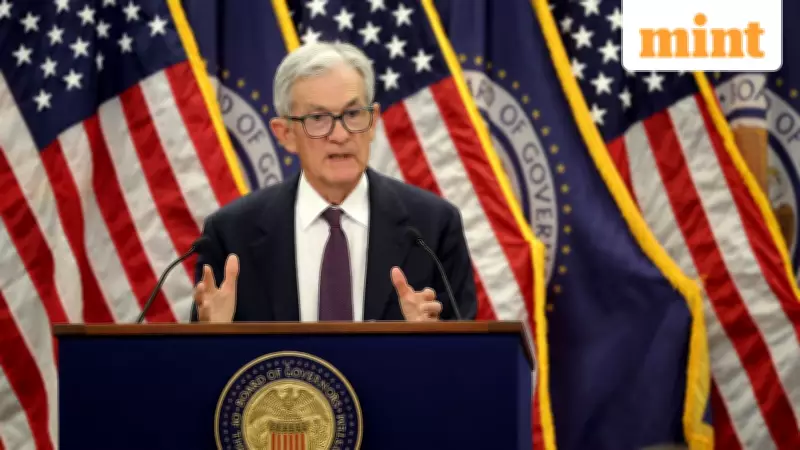
Federal Reserve Chair Jerome Powell struck a notably optimistic tone about the United States economy during his Wednesday remarks, characterizing it as being on a "firm footing" as it enters 2026. However, his assessment turned more measured and uncertain when addressing the burgeoning influence of artificial intelligence on the nation's labor market and broader economic growth.
Powell's Assessment of Current Economic Conditions
In his official statement, Powell highlighted that "the US economy expanded at a solid pace last year" and is positioned strongly for the coming period. He acknowledged that while job gains have remained modest, there are emerging signs of stabilization in the unemployment rate. The Fed Chair also noted that inflation, though somewhat elevated, is being monitored closely within the context of the central bank's ongoing policy decisions.
This positive outlook comes alongside the Federal Open Market Committee's recent decision to maintain the benchmark interest rate steady within the range of 3.50% to 3.75%, reflecting a period of careful observation and strategic monetary policy.

The AI Conundrum: Powell's Cautious Stance
When specifically questioned about the macroeconomic implications of artificial intelligence, Powell offered a characteristically cautious response, essentially admitting the difficulty in making definitive predictions. "So everyone of course is watching AI and the deployment and, you know, trying to understand exactly what's happening. And there's a wide range of possibilities," Powell stated, capturing the prevailing uncertainty among policymakers.
He elaborated on the dual nature of technological advancement, noting that "every technological wave will eliminate some jobs and create other jobs." Powell emphasized that historical patterns show such disruptions are inevitable but ultimately lead to increased productivity, which forms the foundation for rising wages over the long term.
Observing Short-Term Impacts and Analytical Challenges
The Fed Chair confirmed that short-term job losses are already being observed as AI technologies are implemented across various sectors. He pointed to specific data points, suggesting a potential connection between the lower hiring rates for recent college graduates and the adoption of AI systems, though he was careful to note this is not the sole or primary driver.
"You hear large companies saying, many of them saying, that they either won't be hiring for some time or that they're hiring less, or that they're laying people off. And they tend to refer to AI when they when they do that," Powell observed, highlighting how corporate decisions are increasingly being framed through the lens of artificial intelligence integration.
Powell frankly admitted the analytical limitations facing economists: "We don't really have the tools to address the concerns that may arise, but we have a lot of people who focus on analyzing it, and try to understand what the macroeconomic implications are, which which is our job." He acknowledged that AI "could certainly have pretty significant effects on the economy, the workforce, and our society," but stressed the need for continued study and observation.
Contextualizing AI's Role in US GDP Growth
Powell's comments arrive amidst ongoing debate about the actual contribution of artificial intelligence to American economic expansion. Recent analyses challenge the popular narrative that AI alone is driving the US economy forward.
According to reports citing multiple economic research firms, consumption remains the predominant driver of GDP growth in the United States, with AI-related investments ranking as the secondary contributor. Prajakta Bhide, US economic strategist at MRB Partners, clarified that "AI is an important part of the growth story, but it's not the only part of the growth story." She specifically countered the notion that without AI capital expenditure, GDP would have slumped significantly last year.

Bhide's analysis suggests that even in the absence of an AI boom, real growth would have remained above 1.5%, supported by solid personal consumption patterns, though with fewer imports affecting the overall figures.
Supporting this perspective, the Bespoke Investment Group published research in December indicating that categories directly linked to AI spending accounted for only approximately 15% of growth over the previous two quarters. Their analysis further revealed that AI-related components constitute less than 5% of the overall US GDP, suggesting its economic impact, while growing, remains contained within a broader context of multiple growth drivers.
This nuanced understanding reinforces Powell's cautious approach—recognizing artificial intelligence as a transformative force with observable short-term effects on employment, while maintaining perspective on its current scale within the larger economic ecosystem that continues to show fundamental strength according to the Federal Reserve's assessment.