

US Envoy Steve Witkoff Confirms Pakistan's Role as Mediator in US-Iran Peace Negotiations
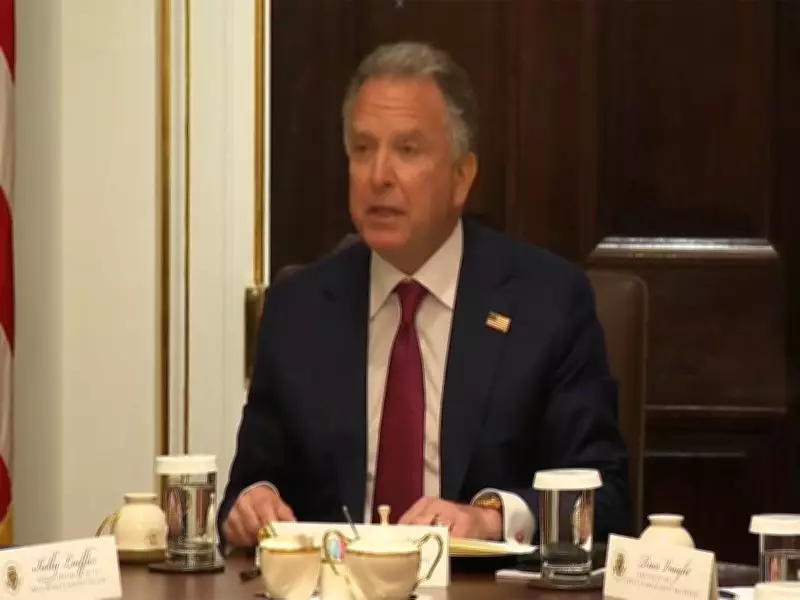
In a significant diplomatic development, United States Special Envoy to the Middle East Steve Witkoff has publicly acknowledged that Pakistan is serving as an intermediary between the US and Iran. This revelation came during a White House Cabinet meeting on Thursday, where Witkoff outlined a 15-point action list designed as a framework for a potential peace deal between the two nations.
Details of the 15-Point Peace Proposal
Witkoff stated that the comprehensive 15-point action list has been circulated through the Pakistani government, which is acting as a mediator in these sensitive discussions. He emphasized that this initiative has led to strong and positive messaging and talks, though he noted that specific terms are being kept confidential at the direction of President Donald Trump to avoid negotiating through the media.
"We have, along with your foreign policy team, presented a 15-point action list that forms the framework for a peace deal. This has been circulated through the Pakistani government, acting as the mediator," Witkoff said during the meeting. He added that if a deal materializes, it would be beneficial for Iran, the entire region, and the world at large.

Iran's Negative Response and Conditions
Despite these efforts, Iran has responded negatively to the American proposal. A senior political-security official told state broadcaster Press TV that Tehran views the offer as one-sided and excessive. Iran insists that any cessation of hostilities will only occur on its own terms and timeline, rejecting external dictates.
The official outlined five specific conditions under which Iran would agree to end the war:
- A complete halt to aggression and assassinations by the enemy.
- Establishment of concrete mechanisms to prevent the reimposition of war on Iran.
- Guaranteed payment of war damages and reparations.
- Conclusion of the war across all fronts and for all resistance groups in the region.
- International recognition and guarantees regarding Iran's sovereign right over the Strait of Hormuz.
These conditions are in addition to demands previously presented during negotiations in Geneva. The official stressed that no further talks will occur until these stipulations are met, asserting that "the end of the war will occur when Iran decides it should end, not when Trump envisions its conclusion."
Witkoff's Praise for Trump's Policy and Diplomatic Strategy
During the Cabinet meeting, Witkoff lauded President Trump's approach, describing the policy of "peace through strength" as the most effective tool for achieving a diplomatic resolution. He referenced this strategy's success in other conflicts settled during Trump's first year in office.
"Your policy of peace through strength is the most effective tool for a diplomatic resolution here, just as this policy was an effective tool in each and every one of all of the other conflicts you settled in your first year," Witkoff remarked. He also indicated that Iran is seeking an off-ramp following recent threats, but warned against miscalculation.
Background and Context of the Conflict
The conflict between the United States and Israel on one side and Iran on the other began on February 28, leading to disruptions in energy supply and regional instability. Washington has been pursuing negotiations through various diplomatic channels, but Tehran perceives the proposals as disconnected from the reality of America's battlefield failures.
Iran has categorized the latest overture, delivered via a friendly regional intermediary, as a ploy to heighten tensions. The official reiterated Tehran's resolve to continue its defensive operations and inflict heavy blows on the enemy until its demands are fulfilled.
As diplomatic efforts continue with Pakistan's mediation, the outcome remains uncertain, with both sides holding firm to their positions in this high-stakes geopolitical standoff.






