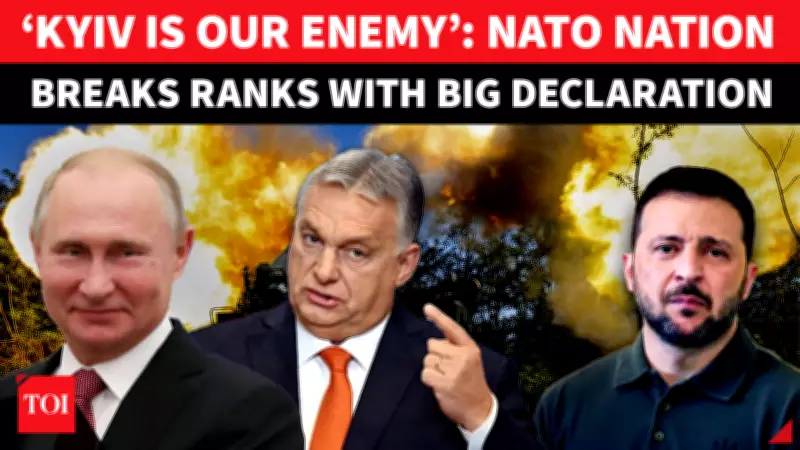
Hungary's Orban Launches Fierce Attack on Ukraine Amid EU Tensions
In a dramatic escalation of diplomatic friction, Hungarian Prime Minister Viktor Orbán has unleashed a scathing critique against Ukraine, branding Kyiv as an adversary in a move that highlights growing rifts within the European Union. Orbán's comments, delivered with sharp rhetoric, accuse Ukraine of actively working to undermine Hungary's critical energy infrastructure and national sovereignty by pushing Brussels to sever Hungary's access to Russian energy supplies.
Energy Security and Sovereignty at Stake
Orbán emphasized that Ukraine's lobbying efforts within the EU to cut off Hungary from Russian energy resources pose a direct threat to his nation's energy security. He argued that such actions could destabilize Hungary's economy and compromise its independence, framing the issue as a matter of national survival. This stance reflects Hungary's longstanding reliance on Russian energy, which has become a contentious point in EU politics, especially as the bloc seeks to reduce dependence on Moscow amid ongoing conflicts.
Military Buildup Raises Alarms
Beyond energy concerns, Orbán raised serious alarms over Ukraine's military expansion, which is partly funded by the European Union. He described a "beefed-up" Ukrainian army as a potential direct threat to Hungary, suggesting that increased militarization could lead to heightened regional instability. This warning underscores fears that the war in Ukraine is not only reshaping geopolitical alliances but also creating new security challenges for neighboring countries like Hungary.

Deepening Tensions in Europe
The remarks from Orbán underscore the deepening tensions between Budapest, Kyiv, and Brussels, as the ongoing war continues to reshape Europe's political and energy fault lines. This conflict has exposed divisions within NATO and the EU, with Hungary's position often aligning more closely with Russian interests, creating a split that some analysts suggest could inadvertently boost Russia's influence in the region. The situation highlights the complex interplay of energy dependencies, military strategies, and sovereignty issues that are defining Europe's response to the crisis.
As these tensions intensify, the future of EU unity and its approach to Ukraine remains uncertain, with Orbán's declarations adding fuel to an already volatile situation.