Newly elected New York City Mayor Zohran Mamdani has found himself at the center of a heated internet debate following his victory speech, where a particular gesture went viral and sparked widespread controversy across social media platforms.
The Viral Moment That Started It All
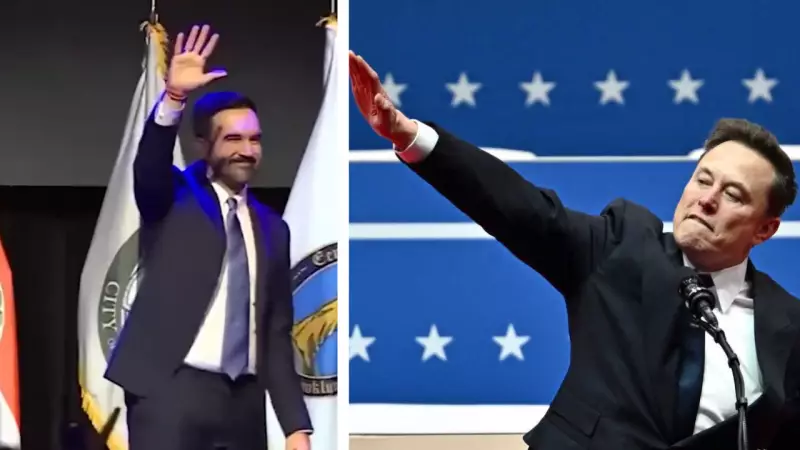
During his celebratory speech after winning the mayoral election, Mamdani was captured on camera raising his arm several times while waving to his enthusiastic supporters. The seemingly innocent gesture quickly transformed into an internet firestorm when social media users began drawing comparisons to historical Nazi salutes.
The controversy gained momentum as users highlighted similarities between Mamdani's arm movements and the gesture that billionaire CEO Elon Musk was accused of making earlier this year. This comparison immediately divided online communities, with some expressing shock that a self-proclaimed socialist would make such a gesture that appears contradictory to his political stance.

Historical Context and Social Media Reactions
The online discussion quickly evolved into a broader conversation about historical symbolism and modern interpretations. Many users revisited the actual definition of the Nazi salute, which historically involved extending the right arm forward at a slight upward angle with the hand straight, fingers together, and palm facing downward.
This salute was mandatory in Nazi Germany and typically accompanied by phrases like Heil Hitler or Sieg Heil. The renewed focus on this historical context added depth to the ongoing debate about whether Mamdani's waving motion could be legitimately interpreted as having fascist connotations.
Social media platforms became battlegrounds for differing opinions, with some users arguing that regardless of political affiliations, certain gestures remain sensitive when performed in front of large crowds. Others defended Mamdani, stating that he was simply engaging in enthusiastic celebration with his supporters.
Elon Musk Connection and Double Standards
The controversy took an interesting turn when users revived memories of Elon Musk's 2025 inauguration-day incident. During President Donald Trump's inauguration celebrations on January 20, 2025, Musk made a gesture that critics immediately labeled as a Nazi or fascist salute.
That earlier controversy had already stirred significant discussion about public behavior, political symbolism, and intent. With Mamdani's clip circulating widely, internet users began questioning whether similar standards were being applied to both public figures, or if political biases were influencing the interpretations.
The comparison between Mamdani and Musk's situations highlighted how similar gestures can be perceived differently based on the individual's political background and public persona. This aspect of the debate raised important questions about consistency in judging public figures' actions.
As the discussion continues to evolve online, the incident serves as a reminder of how quickly gestures can be misinterpreted in the digital age and how historical symbols continue to influence modern political discourse.