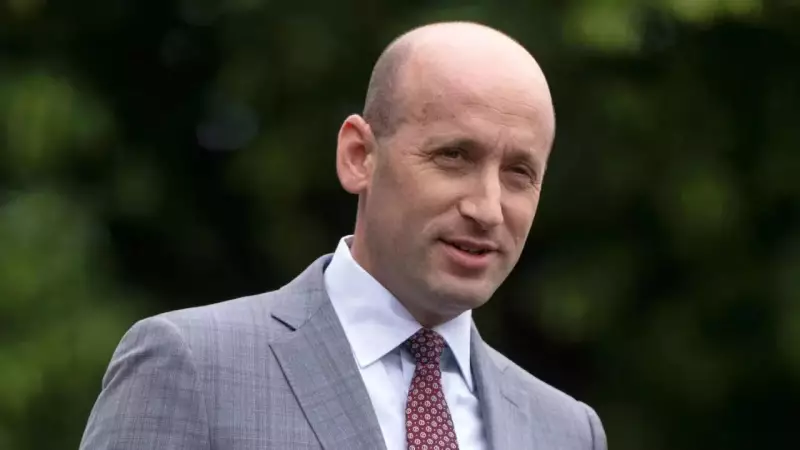
White House Deputy Chief of Staff Stephen Miller made a striking claim over the weekend. He asserted that local and state law enforcement officials in Minnesota received orders to "stand down and surrender" to federal authorities. This statement came amid continuing protests against Immigration and Customs Enforcement operations in Minneapolis.
Miller's Social Media Allegation
Miller posted his comments late Sunday night on social media. He was responding to a post from New York Post columnist Miranda Devine. Devine had written that "local cops have gone AWOL" during the protests. Miller replied directly, stating "Only federal officers are upholding the law. Local and state police have been ordered to stand down and surrender."
Legal Experts Question Miller's Claim
Legal authorities quickly raised questions about Miller's assertion. They pointed out that the federal government lacks the power to issue such commands to local or state police agencies. The 10th Amendment to the U.S. Constitution reserves policing powers primarily to the states. Federal officials cannot legally compel local officers to cease operations or surrender their authority.

Experts also noted that the concept of police "surrendering" typically applies to armed conflicts. No such conflict is occurring in Minnesota currently. Miller's comments followed his recent characterization of the protests as an "insurgency." President Donald Trump has repeatedly threatened to invoke the Insurrection Act of 1807.
The Insurrection Act Context
The Insurrection Act allows a president to deploy military forces to suppress uprisings against federal authority. However, legal scholars from the Brennan Center for Justice clarify important limitations. The law does not permit declaration of martial law. It also does not authorize replacement of civilian government structures.
Miller appeared on The Charlie Kirk Show last Thursday. He argued that protesters' own statements and actions demonstrate what he called an "insurgency" against the federal government. He claimed protesters view the government as an occupying force.
Background of the Minneapolis Protests
The protests in Minnesota form part of broader nationwide demonstrations. They began after the January 7 killing of 37-year-old Renee Nicole Good in Minneapolis. Good died during an ICE operation when she was fatally shot while seated in her SUV.
Federal officials state the ICE agent involved acted in self-defense. They allege Good attempted to run over the agent. Family members and community activists strongly dispute this version of events.
National Implications
Good's killing quickly became a national flashpoint. It occurred amid the Trump administration's aggressive immigration enforcement efforts. The incident sparked public outrage across the country. It also renewed debate about the use of force by federal agents.
Demonstrations intensified in Minneapolis and other cities. Protesters demand accountability for Good's death. They also call for greater limits on ICE operations nationwide. The situation continues to develop as tensions remain high between protesters and federal authorities.