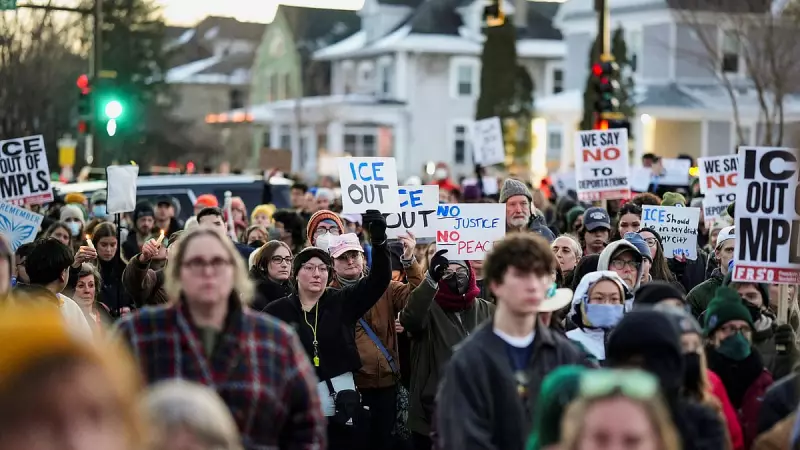
A fatal shooting involving a United States immigration agent in Minneapolis has sparked a major controversy, with the city's mayor publicly and forcefully rejecting the federal government's version of events. The incident, which resulted in the death of a woman, has led to a direct clash between local authorities and the Trump administration over the circumstances of the shooting.
Mayor Frey Challenges the Official Narrative
Minneapolis Mayor Jacob Frey has taken a firm stand against the explanation provided by federal officials. The Trump administration asserted that the agent fired the fatal shot in self-defence. However, Mayor Frey has dismissed this account, stating that video footage of the incident directly contradicts the government's claims.
In strong terms, the mayor labelled the administration's explanation a "garbage narrative." His adamant rejection highlights a significant rift and suggests that visual evidence may tell a different story than the one presented by the federal authorities. This confrontation underscores the tensions that can arise between local and federal law enforcement agencies, especially in high-stakes situations involving use of force.

Details of the Incident and Conflicting Accounts
The shooting occurred in Minneapolis, though specific location details within the city were not immediately disclosed in the initial report. The key figure involved was a US immigration agent, whose specific agency affiliation was not detailed. The victim was a woman, whose identity has not been released publicly.
The core of the dispute lies in the self-defence claim made by the federal government. This legal defence is often invoked in shootings involving law enforcement, justifying the use of lethal force if the officer or agent perceives an immediate threat to their life or safety. Mayor Frey's reference to existing video evidence throws this justification into serious question, implying the footage does not support the agent's fear of a deadly threat.
Broader Implications and Public Trust
This incident, dated 08 January 2026, is likely to have several important consequences. Firstly, it may lead to an independent investigation to determine the facts of the case, potentially involving local prosecutors. The existence of video evidence will be a crucial piece of any such inquiry.
Secondly, the public clash between Mayor Frey and the Trump administration erodes trust in the official narrative from federal authorities. When local leaders, who may have access to immediate evidence, challenge federal accounts, it creates a crisis of credibility. For the residents of Minneapolis and observers across the United States and globally, this case becomes another flashpoint in ongoing debates about police accountability, transparency, and the use of force by immigration authorities.
The outcome of this dispute will depend heavily on the release or detailed description of the video evidence. It also places immense pressure on investigative bodies to provide a clear, unbiased account of what transpired, balancing the need for justice for the victim with a fair legal process for the agent involved.