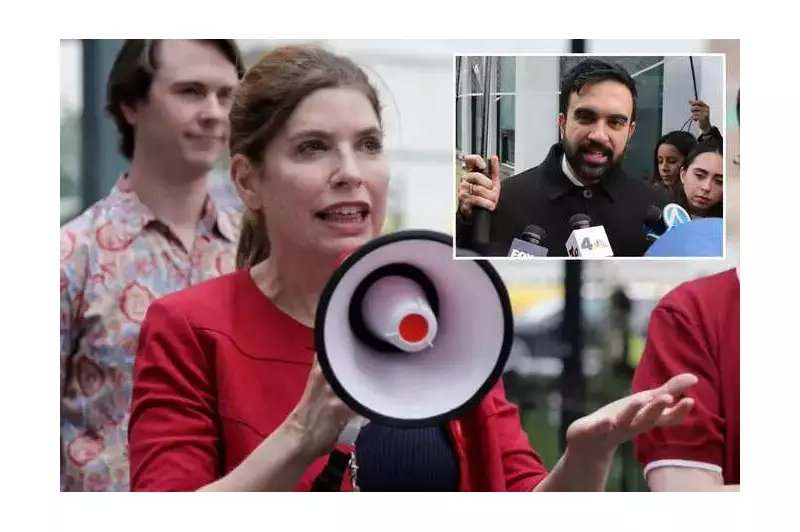
The political landscape of New York City is undergoing a historic transformation in 2026, defined by an unprecedented partnership between its new mayor and the powerful head of its legislative body. The election of Zohran Mamdani as Mayor and the rise of Julie Menin as the presumptive Speaker of the New York City Council sets the stage for a complex and potentially revolutionary chapter in American urban governance.
The Mamdani Mandate: A Progressive Wave Hits City Hall
January 2026 marks the beginning of a new political era for America's largest city. Zohran Mamdani's ascent to the mayor's office is nothing short of seismic. At 34, he becomes New York City's youngest mayor in decades, its first Muslim mayor, its first South Asian mayor, and one of the most openly democratic socialist leaders ever elected to a major executive office in the United States.
His victory, powered by grassroots coalitions, progressive activism, and a generational demand for change, represents a clear ideological shift. Mamdani's campaign centered on urgent issues like housing affordability, transit justice, childcare access, and tackling wealth inequality—themes that resonated powerfully with renters, young voters, and working-class communities. However, the ambitious scope of his agenda means his ability to deliver depends entirely on forging a strong legislative partnership.

Julie Menin: The Pragmatic Power Broker in the Council
This is where Julie Menin enters the spotlight. While the mayor captures headlines, the Speaker of the New York City Council wields immense, often underrated power. The Speaker controls which bills advance, oversees committee assignments, shapes critical budget negotiations, and acts as the primary counterweight or collaborator to the mayor. Simply put, no major reform passes without the Speaker's blessing.
Menin is no political novice swept in by a wave. A long-time council member from Manhattan's Upper East Side, she represents a starkly different archetype from Mamdani. Her career is built on pragmatism, legislative tactics, and a deep understanding of municipal machinery. Before elected office, she served as Commissioner of the New York City Department of Consumer Affairs, giving her firsthand experience with budgets, compliance, and institutional reform.
Her academic foundation is equally formidable, with an undergraduate degree from Columbia University and a law degree from Harvard Law School. This background informs her methodical, process-driven approach. Colleagues see her as a stabilising force, a bridge between centrist Democrats and progressive reformers, focused on governance over grandstanding.
A Partnership of Necessity and Strategy
On paper, Mamdani and Menin occupy different worlds. Mamdani emerged from activist politics, speaking the language of systemic change. Menin rose through bureaucratic and legislative ranks, emphasizing operational efficiency and institutional stability. Yet, New York politics has long thrived on such tension.
Their relationship is less about pure ideological alignment and more about strategic coexistence. Observers note that transformative agendas need procedural expertise to survive. Menin has already signaled her priorities by focusing on internal council reforms—streamlining hearings, restoring discipline, and ensuring predictable operations. For Mamdani, whose proposals require sustained legislative throughput, a Speaker focused on efficiency could be an unexpected asset.
The Real Tests Ahead: Housing, Transit, and Budgets
The true strength of the Mamdani-Menin alliance will be tested in concrete policy battles. Key battlegrounds include:

- Housing Policy: Mamdani has promised aggressive rent stabilization and public housing expansion. Menin, representing a district with powerful real estate interests, must balance local concerns with citywide pressures.
- Transportation: Initiatives like fare-free buses and expanded transit access are cornerstones of Mamdani's platform. Their funding will require careful fiscal navigation and council buy-in.
- Budget Negotiations: Menin's influence in shaping the city's budget will be decisive, determining how much of the mayor's vision survives fiscal scrutiny.
Importantly, Menin is not merely an ally; she is a constitutionally mandated check on mayoral power. Early indications suggest she will not rubber-stamp proposals, even while collaborating where priorities overlap. This dynamic reflects a core reality: in a city as complex as New York, lasting change requires negotiation.
A Laboratory for the World
This political partnership is being watched far beyond the five boroughs. Urban policymakers across the United States and internationally are observing how a progressive mayor governs alongside a more centrist legislature, how ideological ambition translates into deliverable policy, and how cities can address deep economic inequality without triggering institutional backlash. Once again, New York serves as a grand political laboratory.
Public sentiment is mixed but engaged. Supporters view Menin as the stabilising force that can help Mamdani turn vision into action. Critics worry she may dilute reformist ambitions. Others see the pairing as a necessary compromise in a city that defies ideological purity.
Zohran Mamdani may be the face of New York's new political moment, but Julie Menin, as City Council Speaker, is one of its chief architects. Together, whether in harmony or creative tension, they will define how the city tackles its most pressing crises in 2026 and beyond. In New York, revolutions are rarely solo acts; they are negotiated, legislated, and tested in the council chambers.