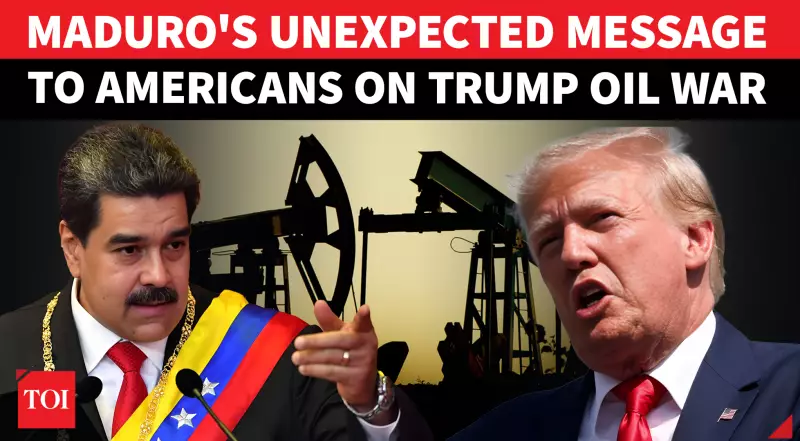
In a fiery address that blended year-end review with geopolitical accusation, Venezuelan President Nicolas Maduro has launched a scathing attack on American media outlets. The leader alleged they are fabricating a false narrative about his nation to pave the way for foreign intervention.
Maduro's Accusation: Manufacturing 'Virtual Realities'
The incident unfolded on Friday at the Miraflores Palace in Caracas. President Maduro was leading a cabinet meeting to assess his government's management throughout 2025 and to outline key issues for the upcoming 2026-2031 period. During his remarks, he dedicated a significant portion to criticising the coverage of Venezuela by media based in the United States.
Maduro accused these outlets of constructing what he termed 'virtual realities' about the South American country. He asserted that this distorted portrayal is a deliberate strategy aimed at justifying the imposition of a 'colonial government' on Venezuela, undermining its sovereignty. The President urged the US media to broaden its perspective and look at the actual reality within his nation.

The Alleged Leak: Trump's 'Original Gameplan'
Adding a dramatic twist to his speech, Maduro claimed to have obtained and subsequently leaked what he described as former US President Donald Trump's 'original Venezuela gameplan'. While the Venezuelan leader did not provide extensive documentary evidence during the public address, his assertion signals a continued escalation in the long-standing war of words between Caracas and Washington.
This revelation, made amid what Maduro characterised as a continuing 'siege' against Venezuela, is positioned as proof of hostile intentions from certain US political quarters. The details of this alleged plan were not fully disclosed in the initial reports, but the claim itself serves as a potent political tool for Maduro's domestic and international messaging.
Context and Implications
This latest broadside from Caracas comes amidst persistent economic sanctions and political pressure from the United States and its allies on the Venezuelan government. Maduro's strategy appears to be twofold: to discredit external criticism by framing it as media manipulation and to rally nationalistic support by exposing alleged foreign plots.
By invoking the name of Donald Trump, a figure historically associated with a 'maximum pressure' campaign against his administration, Maduro seeks to keep the focus on perceived external threats. The timing, during a strategic planning meeting for the nation's next six-year period, underscores his attempt to frame Venezuela's future challenges through the lens of resisting foreign interference.
The international community, particularly observers in India with interests in global energy markets and non-aligned diplomacy, will be watching closely. Such accusations deepen the rift between Venezuela and the US, potentially affecting regional stability and global oil supplies. Maduro's move is a calculated effort to control the narrative around his country as it heads into a new political cycle.