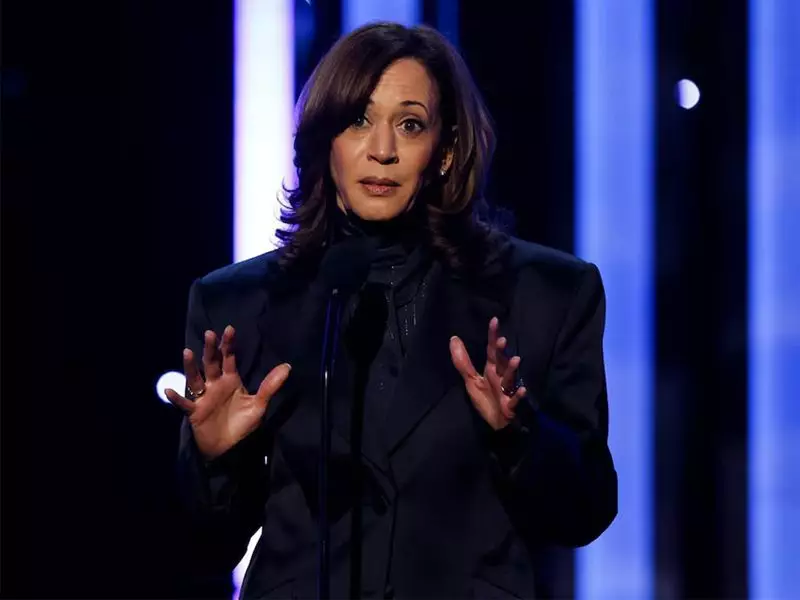
In a sharp political attack, US Vice President Kamala Harris has accused her Republican rival, former President Donald Trump, of being motivated by oil interests in his approach towards Venezuela, dismissing his stated concerns about democracy and drugs. The accusation came during a campaign event in Florida, a key battleground state with a significant Venezuelan-American population.
Harris's Scathing Critique on the Campaign Trail
Addressing supporters, Harris framed the upcoming November election as a fundamental choice for American voters. She then turned her focus to Trump's foreign policy, specifically his dealings with the government of Venezuelan President Nicolas Maduro. Harris asserted that Trump's primary objective was securing access to Venezuela's vast oil reserves, not promoting democratic values or combating drug trafficking. Her comments directly challenge a central narrative of Trump's previous administration regarding its Latin America policy.
The Vice President referenced a recent meeting in New York between representatives of Trump and Maduro, which has drawn significant scrutiny. She used this event to bolster her claim that Trump's intentions are transactional and resource-driven. "This is not about drugs or democracy," Harris stated emphatically, "This is about oil." Her remarks are designed to paint a contrast between the current Democratic administration's stance and the perceived pragmatism of the former Republican president.

The Context: Trump, Maduro, and Sanctions
The backdrop to this political exchange is the complex and often hostile relationship between the United States and Venezuela. The US has long recognised opposition figure Juan Guaido as the legitimate leader of Venezuela, a position established during the Trump era and initially maintained by the Biden-Harris administration. A major point of contention has been the series of crippling economic sanctions imposed on Maduro's government, aimed at forcing a political change.
However, in a significant policy shift last year, the Biden administration agreed to temporarily ease some key oil sanctions on Venezuela. This move was conditional upon Maduro's government committing to a roadmap for free and fair presidential elections in 2024. The deal involved the release of several American prisoners and a promise of electoral reforms from Caracas. Critics, including many Republicans, saw this as appeasement of an authoritarian regime.
Harris defended this strategic easing of sanctions, arguing it was a diplomatic effort to foster democratic progress and address global energy market fluctuations exacerbated by the war in Ukraine. She positioned it as a nuanced approach compared to what she characterised as Trump's purely mercantile interest.
Political Repercussions and the Florida Vote
The choice of Florida as the venue for these comments is highly strategic. The state is home to a large and politically influential diaspora from Latin America, including many Venezuelans who fled the economic and political crisis under Maduro. This community holds strong views on US policy towards the Caracas government.
By accusing Trump of seeking a deal for oil, Harris is attempting to undermine his credibility with voters who are deeply opposed to the Maduro regime. Her message aims to suggest that Trump would be willing to legitimise Maduro in exchange for favourable energy deals, a potentially damaging charge in a critical swing state. The Trump campaign has yet to issue a detailed rebuttal to Harris's specific "oil" allegation, but has consistently criticised the Biden administration's foreign policy as weak.
The exchange highlights how foreign policy, particularly regarding volatile regions with strategic resources, can become a potent weapon in domestic political campaigns. The future of US-Venezuela relations, including the status of sanctions and diplomatic recognition, now appears firmly tethered to the outcome of the November 5th presidential election. Both campaigns are using the issue to rally their bases and appeal to specific demographic groups, setting the stage for further heated debates on America's role in the hemisphere.