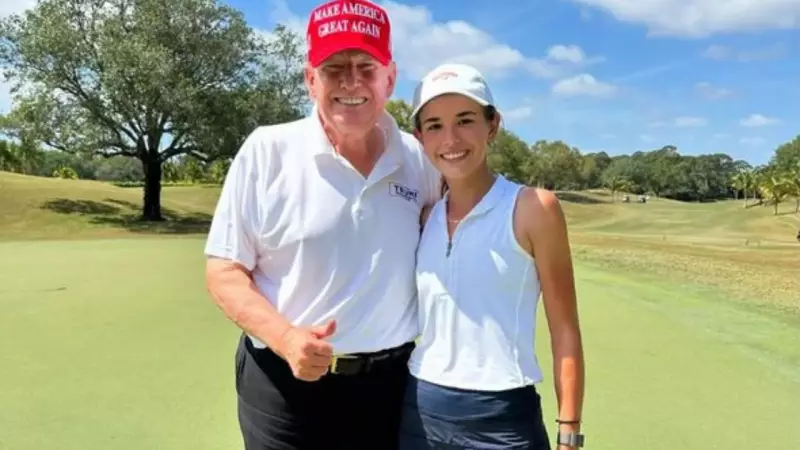
Kai Trump, the eldest child of Donald Trump Jr. and Vanessa Haydon, has provided a rare and candid glimpse into the unique challenges of growing up under the constant watch of the United States Secret Service. In a recent podcast appearance, the teenager detailed how the most ordinary aspects of her life, from dating to friendships, have been fundamentally altered by the security apparatus tasked with protecting her family.
The Invisible Burden of Constant Surveillance
Kai Trump explained that her life changed significantly in 2025, when her grandfather, Donald Trump, returned to the White House. This event triggered the reinstatement of full-time Secret Service protection for her. While she understands and appreciates the necessity of this security, she describes the emotional cost as significant. The surveillance turns private, unplanned moments into monitored events, stripping away a sense of normalcy.
One of the most affected areas is her dating life. Kai revealed that going on a simple first date now comes with an inherent disadvantage. She is acutely aware that agents could be watching from nearby, which adds immense stress and makes the experience feel staged and awkward. This transforms what should be a carefree teenage rite of passage into a high-pressure situation.

Awkward Social Engagements and Lost Independence
Speaking to host Logan Paul, Kai described how Secret Service agents, though trying to blend into the background, are a constant presence. They are typically positioned just a short distance away during social outings, which inevitably affects the dynamic. She contrasted this with a two-year period when her grandfather was not president, during which she experienced life without agents. That freedom, she said, allowed her to “grow” as a person. The return to constant observation was a difficult adjustment.
The nature of the protection also involves intervention. Kai noted that while the Secret Service has limited authority in purely social settings, they can issue discreet warnings if a potential threat is detected. Although meant to be reassuring, the act of having to leave a situation based on such a warning can feel isolating and unsettling, rather than safe.
Compartmentalizing and Facing the Future
To cope, Kai Trump has adopted a strategy of mental compartmentalization. She consciously chooses to focus on her own life and interactions, pretending the agents are not there, in an effort to reclaim some semblance of normalcy with family and friends. This mindset, she believes, helps her manage the psychological weight of being perpetually observed.
Looking ahead, she acknowledges that public attention will only intensify as she prepares to begin her collegiate golf career. The discipline needed to tune out persistent surveillance, she admits, will be crucial to maintaining composure under the pressure of competitive golf. Kai has been remarkably open about an experience she never chose—a life in the public eye with an unseen emotional burden. She reflects on the sobering reality that she may never have the opportunity to experience life without constant observation, a trade-off for the security that surrounds her.