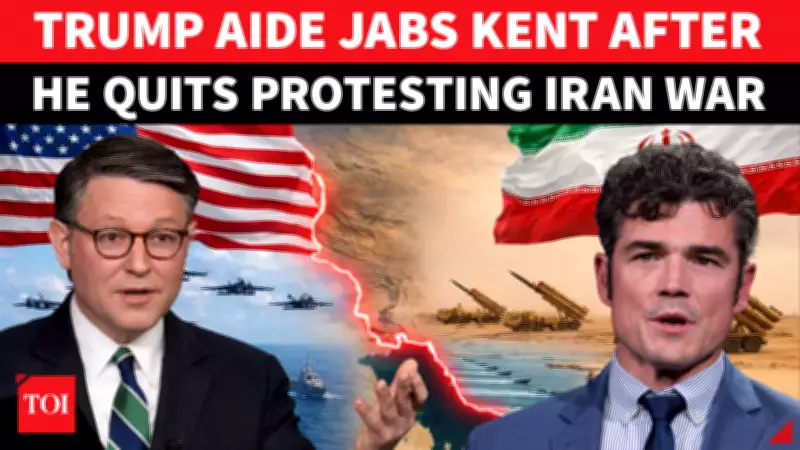
Mike Johnson Forcefully Rebuts Joe Kent Over Iran Threat Claims
In a dramatic political confrontation, House Speaker Mike Johnson has issued a sharp rebuttal to claims made by Representative Joe Kent regarding the perceived threat from Iran. Johnson insisted that classified intelligence briefings provided to top U.S. leaders clearly indicated an imminent danger before military strikes were ordered by former President Donald Trump.
Johnson Cites 'Gang of Eight' Briefings as Evidence
Speaking with authority, Johnson referenced the highly sensitive "Gang of Eight" briefings that are typically reserved for congressional leadership and key intelligence committee members. He emphasized that these confidential sessions left no ambiguity about the severity of the threat posed by Iran at the time.
"The intelligence was clear and compelling," Johnson stated, "and those of us who were present in those critical briefings understood the gravity of the situation." He dismissed Kent's remarks as uninformed, noting that Kent was not present during these pivotal intelligence discussions that shaped national security decisions.

Growing Political Divisions in Washington
This public clash highlights the intensifying debate within Washington over the justification behind the Iran conflict. As political tensions rise, Johnson's firm stance underscores a deepening divide between those who had access to classified intelligence and those who did not.
The exchange between Johnson and Kent reveals several key points:
- Johnson maintains that intelligence briefings unequivocally showed an imminent threat from Iran
- Kent's absence from these briefings is cited as a critical factor in his differing assessment
- The conflict has become a flashpoint in broader debates about national security decision-making
- Political divisions are becoming more pronounced as the justification for military action is questioned
Implications for National Security Discourse
This confrontation goes beyond mere political disagreement, touching on fundamental questions about how intelligence is shared and interpreted within government. Johnson's insistence on the clarity of the threat assessment suggests that the intelligence community provided unambiguous warnings that were acted upon by the previous administration.
As the debate continues to intensify, this exchange between Johnson and Kent serves as a microcosm of larger conflicts within Washington regarding foreign policy, intelligence transparency, and the appropriate use of military force. The sharpness of Johnson's rebuttal indicates how seriously he views what he considers to be misinformation about critical national security matters.