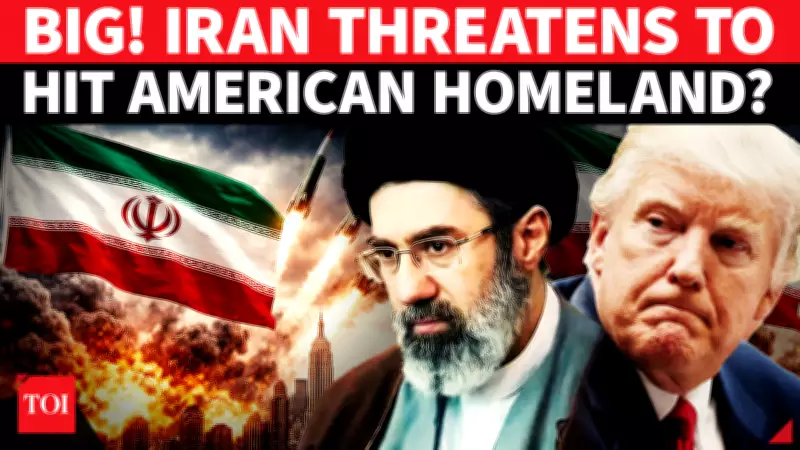
Iran Issues Stark Warning to U.S. Over Trump's Threat to Strait of Hormuz
In a dramatic escalation of tensions, Iran has delivered a chilling warning to the United States, stating that the ongoing conflict could potentially reach American soil. This stark declaration comes directly in response to a provocative social media post by former U.S. President Donald Trump, which contained explicit threats against Iranian infrastructure.
Trump's Profane Ultimatum on Social Media
On Sunday, Donald Trump posted an expletive-laden message on his social media platform, issuing a direct ultimatum to Iran. He threatened to launch attacks on Tehran's critical energy infrastructure, including power plants and bridges, if the Islamic Republic did not comply with demands to open the strategically vital Strait of Hormuz. Trump specifically designated an upcoming Tuesday as "Power Plant Day, and Bridge Day, all wrapped up in one, in Iran," punctuating his statement with profanity to emphasize his aggressive stance.
Iran's Grave Response and Regional Implications
According to reports from Iranian state media, Tehran has responded with a severe warning, indicating that any such military action by the United States would have dire consequences. Iranian officials explicitly stated that the repercussions of the war could extend beyond the Middle East and directly impact American territory. This marks a significant intensification in rhetoric, suggesting a potential broadening of the conflict's geographical scope.

The Strait of Hormuz is a critical maritime chokepoint through which approximately one-fifth of the world's oil passes. Control over this waterway has long been a point of contention between Iran and the United States, with previous administrations also engaging in tense standoffs over freedom of navigation and regional security.
Background of Escalating U.S.-Iran Tensions
The exchange occurs against a backdrop of heightened military activity and hostile rhetoric between the two nations. Recent reports have detailed several incidents, including:
- Iranian attacks on Israeli targets, with missile strikes reportedly hitting Tel Aviv and causing casualties in Haifa.
- Shooting incidents near the White House, which some sources have speculated may be linked to Iranian operatives, though this remains unconfirmed.
- Military engagements involving U.S. and Iranian forces, including the downing of aircraft such as F-16s, F-35 stealth fighters, and Black Hawk helicopters, as well as the recovery of a missing U.S. F-15E after a gunfight.
- Cyber and infrastructure attacks, with reports of Iranian forces targeting data centers in Dubai and other critical assets.
These events illustrate a volatile environment where any miscalculation could lead to a wider war. The involvement of proxy groups like Hezbollah, potentially utilizing advanced Russian drone technology against Israel, adds another layer of complexity to the regional conflict.
Analysis of the Strategic Stalemate
The current standoff highlights the deep-seated animosity and strategic rivalry between Iran and the United States, which has persisted for decades. Trump's return to a confrontational posture echoes his previous administration's "maximum pressure" campaign, which included sanctions and the assassination of Iranian General Qasem Soleimani in 2020. Iran's warning about the war reaching U.S. soil represents a shift in its deterrent strategy, traditionally focused on regional proxies and asymmetric warfare.
Experts warn that such bellicose exchanges increase the risk of accidental escalation, particularly given the involvement of multiple state and non-state actors in the region. The situation remains fluid, with diplomatic channels reportedly strained and military posturing on both sides intensifying.
As the world watches closely, the potential for a broader conflict that could draw in global powers remains a significant concern, with the Strait of Hormuz serving as a potential flashpoint for international crisis.