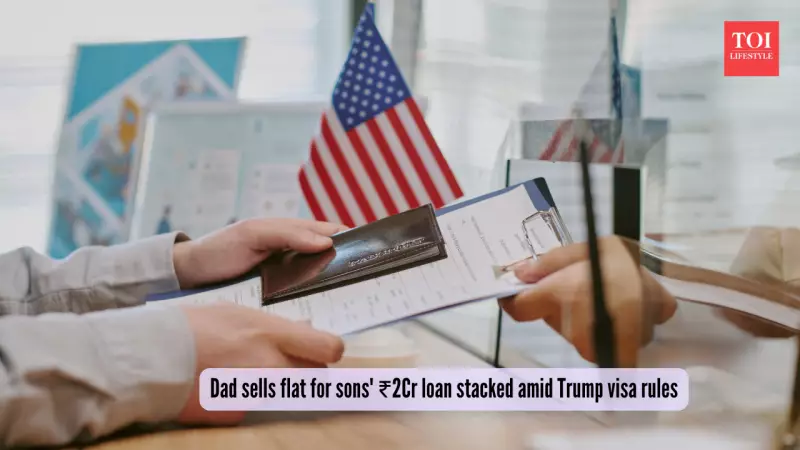
Indian Father Sells Flat After Trump Visa Rules Crush US Dreams, Loans Hit ₹2 Crore
For countless Indian families, America represents a land of golden opportunity. Parents work tirelessly for years, investing their entire life savings and taking massive loans. They dream of securing top foreign degrees for their children, followed by high-paying jobs and coveted green cards. This pursuit often demands immense financial sacrifice.
The Dream Turns Sour Under New Policies
Recently, this American dream has started to fade for many. Stricter US visa regulations, a challenging employment landscape, and policy shifts during President Donald Trump's administration have created immense uncertainty. What began as exciting ambition for thousands of Indian students has frequently ended in disappointment and financial strain.
One powerful story from Visakhapatnam highlights this painful reality. A local entrepreneur, Aditya Rajgarhia, shared a heartbreaking account on social media platform X. He detailed the plight of a close friend who sent both his sons to the United States for master's degrees despite lacking sufficient funds.

The family's debt quickly escalated to a staggering ₹1.5 crore by the time the brothers completed their studies. The father, already managing a struggling small business, continued to support his sons from India, sending money overseas every month.
Trump's Immigration Crackdown Hits Hard
The situation worsened dramatically due to immigration policy changes. The H-1B visa program, once a dependable path from student status to professional work in America, became far more restrictive. Following President Trump's 2025 inauguration, rules tightened significantly.
Indian graduates, who traditionally form a large portion of H-1B applicants, now face slimmer chances in the visa lottery. This challenge coincides with a reduction in available entry-level technology positions across the US market.
According to Aditya's post, both young men searched endlessly for employment but found nothing. Their father felt compelled to increase his financial support. "Earlier, he would send them ₹1 lakh each month to augment their part-time income," Aditya explained. "After Trump, he asked them to quit their part-time jobs and started sending ₹2 lakh each."
The relentless financial pressure pushed the family's total loans to an overwhelming ₹2 crore. With no other options left, the father made the difficult decision to sell the family's apartment simply to manage the escalating debt.
A Glimmer of Hope Amid the Crisis
A recent development offered a slight reprieve. The elder son finally secured an H-1B visa in the latest lottery draw and found a full-time job. Aditya noted on X, "Luckily, in the recent lottery, the elder one got picked, got a full-time job, and while the salary is low, at least he's able to make ends meet."
This positive turn has eased some immediate pressure on the family. However, their entire ordeal has exposed the profound vulnerabilities facing many Indian students and their parents who invest everything in overseas education.
A Call for Empathy, Not Judgment
Aditya described the situation as "terrible" and emphasized it is not an isolated case. He stated, "Tens of thousands of Indian students (and parents) are in the same boat now, with more joining each year."
He urged people to show compassion rather than criticism. "It is easy for us to pass judgment sitting here," he said, "but it is quite difficult for young kids - caught between a market that no longer has many entry-level jobs available and a big loan back home that keeps growing."
Similar distressing accounts have gained attention on forums like Reddit and in various news reports. These stories often involve students burdened with loans exceeding ₹40 lakh, leading to severe family stress, health issues, and relentless struggles with repayment.
The Visakhapatnam family's experience serves as a stark warning. It underscores the high risks associated with pursuing the American dream in today's volatile political and economic climate.