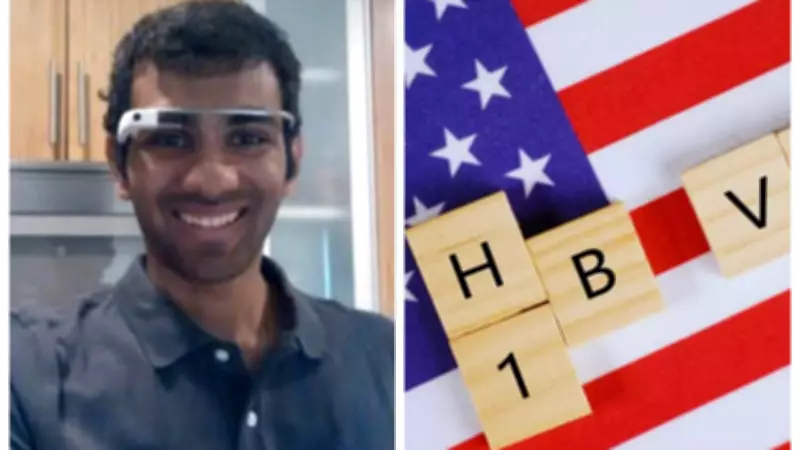
Indian-American CEO Confronts Racist Remark Amid US Visa Policy Debate
Experiencing racial hostility as an Indian in the United States is, unfortunately, a recurring issue, but a recent incident has brought this to the forefront in a debate over immigration policies. Nitish Kannan, an Indian-origin CEO, was subjected to a derogatory comment during an online discussion, where he was told to "go to China" instead of India. This remark came as Kannan criticized the prevailing narrative in the US that aims to restrict entry for various groups, including holders of H-1B and O-1 visas.
Debate Over Visa Policies and Global AI Competition
The exchange occurred in the context of a broader conversation flagged by Hany Girgis, a US ed-tech CEO, who shared a video promoting the O-1 visa as an alternative to the H-1B. Girgis described the situation as "musical chairs for visa categories," noting that as one immigration channel closes, others open up, with the market adapting faster than legislative reforms. The O-1 visa, designed for individuals with extraordinary abilities, offers advantages such as no cap and a high approval rate, reducing uncertainties compared to the H-1B program.
In response, Kannan highlighted the irony of the US pushing to exclude foreign talent while China advances in artificial intelligence. He pointed out that the US is "fighting to keep everybody out," whereas China is aggressively developing cutting-edge AI technologies. This led to the racist retort from an anti-India content creator, Andrew Branca, who questioned why Indians, if so skilled in AI, are not developing it in India and noted that zero Indians receive permanent residence or citizenship in China.

Broader Implications and Policy Changes
The debate underscores ongoing tensions in US immigration policy, particularly with recent measures like a $100,000 fee imposed on H-1B visa petitions to discourage hiring foreigners. This move has sparked concerns about competitiveness and innovation, as critics argue it could hinder the US's ability to attract global talent in fields like technology and AI.
Key points from the discussion include:
- The O-1 visa serves as a flexible alternative to the H-1B, with no limits and high approval rates.
- Racist comments, such as telling an Indian to "go to China," reflect deeper prejudices in immigration debates.
- The US-China rivalry in AI development is influencing perceptions of immigration and talent retention.
This incident not only sheds light on personal experiences of discrimination but also raises critical questions about how visa reforms impact global talent flows and technological advancement. As the US grapples with these issues, the voices of Indian-Americans and other immigrant communities continue to highlight the need for inclusive and forward-thinking policies.