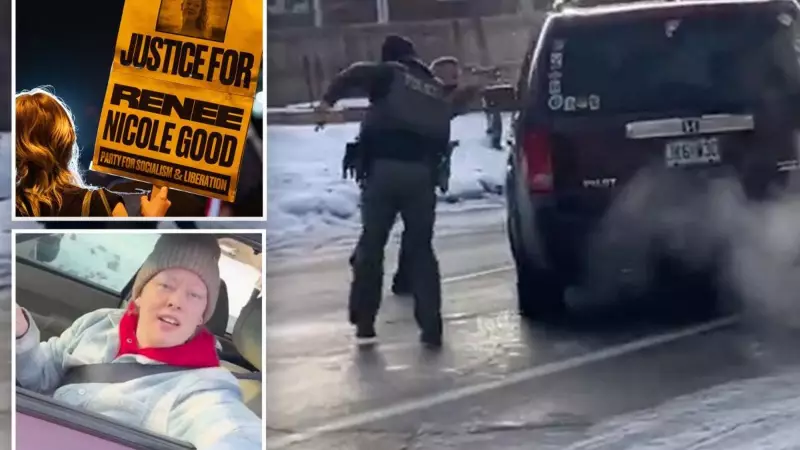
A disturbing video from Minneapolis has ignited a significant legal and political conflict between federal and state authorities in the United States. The footage captures the moment a federal immigration officer shot a woman named Renee Good during an attempted arrest. This incident has escalated into a tense standoff, with Minnesota state officials demanding jurisdiction over the case, while federal agencies assert their authority.
The Minneapolis Shooting Incident: What the Video Shows
The central piece of evidence is a video recorded by a bystander on a mobile phone. It shows officers from U.S. Immigration and Customs Enforcement (ICE) attempting to detain Renee Good. During the encounter, the situation turns violent. The video clearly depicts an ICE officer firing his weapon, striking Good. She survived the shooting but sustained injuries.
Following the incident, the Minneapolis Police Department arrived at the scene. However, they were reportedly prevented from conducting a full investigation or taking the involved ICE officer into custody. Federal agents asserted their supremacy, leading to a confrontation right on the street. This immediate blockage by federal authorities is a key point of contention, as local law enforcement is typically the first responder to violent crimes within city limits.

Legal and Political Fallout: Who Has Jurisdiction?
The shooting has triggered a complex legal battle over jurisdiction. On one side, the Hennepin County Attorney's Office and local police are pushing to investigate the shooting as they would any other potential crime. They argue that state laws against assault and use of force apply equally to federal officers when on Minnesota soil.
On the other side, ICE and the Department of Homeland Security (DHS) are shielding the officer involved. They claim the officer acted in self-defense during a lawful enforcement operation. More critically, they are invoking federal immunity, a legal doctrine that can protect federal agents from state prosecution for actions taken within the scope of their duties. This has created a deadlock, with state prosecutors unable to even interview the shooter.
The standoff highlights the ongoing tensions between sanctuary city policies, embraced by Minneapolis, and aggressive federal immigration enforcement. It raises profound questions about accountability and whether federal agents operate with impunity in states that oppose their tactics.
Calls for Justice and Broader Implications
Community groups and activists in Minneapolis are demanding transparency and justice for Renee Good. They see the federal government's refusal to cooperate as a denial of local sovereignty and a failure of accountability. Legal experts note that such standoffs are rare but explosive, potentially requiring intervention from the U.S. Department of Justice to resolve.
The case also puts a spotlight on the tactics of ICE's Enforcement and Removal Operations (ERO) teams. The question of whether the use of lethal force was justified in this specific arrest attempt remains unanswered for the public and state authorities. This incident is likely to fuel further debate on the limits of federal power and the rights of states to police actions within their own borders.
As it stands, the video of the shooting is more than evidence of a single violent moment; it has become a flashpoint in the larger struggle between state and federal authority in America, with Renee Good's case stuck in the middle. The outcome could set a significant precedent for how similar incidents are handled in the future.