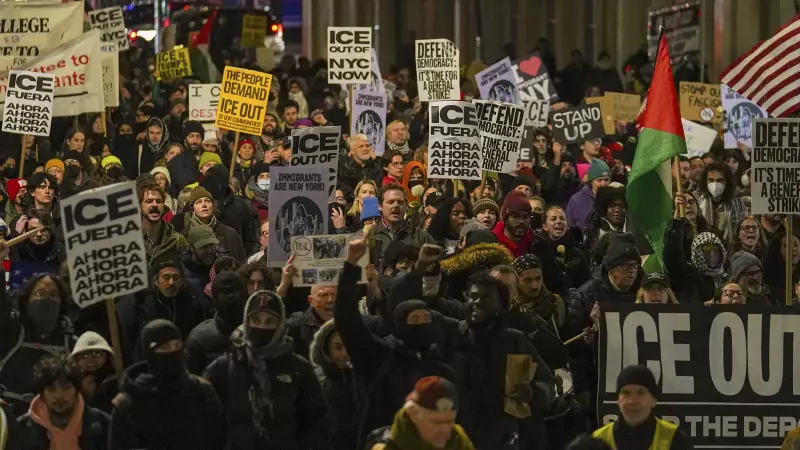
The fatal shooting of a 37-year-old American citizen by an Immigration and Customs Enforcement (ICE) agent has plunged the United States into a profound national debate. The death of Renee Nicole Good on January 8, 2026, is not just a tragic incident but a flashpoint exposing two violently opposing ideas of the nation. As massive protests demand accountability, the core questions—Who is an American? and What does America stand for?—hang in the balance.
A Fatal Shooting and a Swift Political Narrative
The incident occurred when ICE agents pursued Renee Good. Authorities, including Vice President J D Vance and Secretary of Homeland Security Kristi Noem, swiftly branded Good a "domestic terrorist." Without waiting for an investigation, they claimed she attempted to run over the agents. The administration defended the shooter, agent Jonathan Ross, with Vance stating he had "absolute immunity" and deserved "a debt of gratitude."
This narrative was constructed despite Good being a White, Christian, mother of three, and a born US citizen. Her death underscores a harsh reality: in the current political climate, even checking most boxes of the administration's implied ideal is no guarantee of safety or dignity.

The Context of a Crackdown: Record Detentions and Raids
Good's killing is not an isolated event. It occurred within the context of President Donald Trump's second-term promise to execute the "largest mass deportation in US history." Since his 2025 return to the White House, ICE's powers have been significantly expanded to target "illegal aliens."
The data paints a stark picture. Good was the 15th person shot at by ICE agents since the start of Trump's second term. The year 2025 was the deadliest in two decades for individuals in ICE custody, with 32 recorded deaths. Detention numbers have soared, hitting a record high of more than 68,400 people by December 14, 2025.
The crackdown is felt widely across communities. A Pew Research Centre survey indicates that 59% of Latinos, 47% of Asians, 39% of Black people, and 38% of White people in the US report ICE raids in their local areas.
A Nation Pushes Back: Protests and an Alternative Vision
However, a significant portion of the American public is forcefully rejecting the administration's approach. Since Good's killing, massive protests demanding ICE be held accountable have erupted nationwide. The public sentiment is shifting, with a December Pew survey noting that 53% of Americans believe the government is doing "too much" on illegal immigration.
This dissent is manifesting in concrete actions. In New York City, the new year began with the swearing-in of immigrant mayor Zohran Mamdani, who won on a platform of inclusivity. From Minnesota to other states, residents and local leaders are actively blocking ICE's access to their communities. Minnesota Governor Tim Walz framed protest as a "patriotic duty," urging ICE to leave his state.
This movement champions a different, more expansive definition of American identity—one based on diversity, compassion, and solidarity. It stands in direct opposition to a vision that appears to narrowly define an American as conservative, Christian, White, and native-born.
Conclusion: A Defining Moment for American Identity
The collision between these two ideas of America—one exclusionary and enforcement-driven, the other inclusive and protective of community—has reached a critical juncture. The death of Renee Good has become a powerful symbol in this struggle. As protests continue and political battles intensify, the answer to what America ultimately stands for remains fiercely contested. The outcome will define the nation's character for years to come.