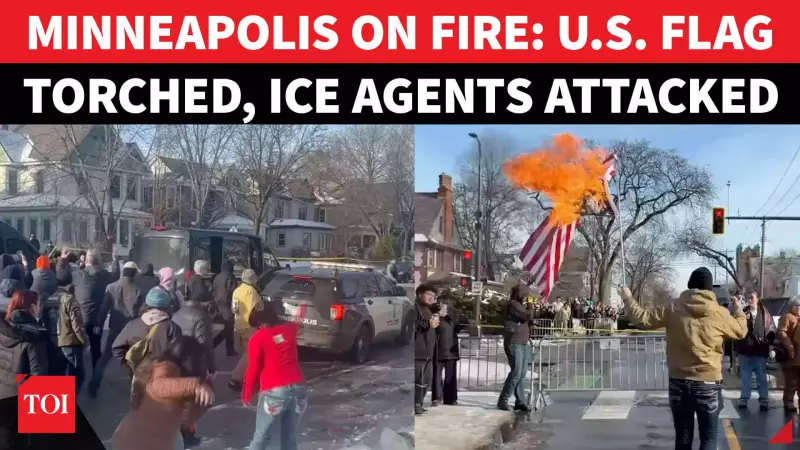
The city of Minneapolis was plunged into chaos and grief on Wednesday after a federal immigration operation turned deadly, resulting in the fatal shooting of an American woman and triggering massive, angry protests.
What Happened in South Minneapolis?
The incident occurred in the South Minneapolis area, near East 34th Street and Portland Avenue. According to reports, 37-year-old Renee Nicole Good was shot and killed by an agent from Immigration and Customs Enforcement (ICE) during what has been described as a federal operation. The exact circumstances leading to the gunfire remain under investigation, but the outcome was immediate and tragic.
The death of a local resident at the hands of a federal officer acted as a catalyst, igniting long-simmering tensions in the community. Within hours, the scene transformed from a crime scene into an epicenter of public outrage.

Protests Escalate into Confrontations
Hundreds of furious demonstrators poured into the streets, expressing their anger and demanding justice. The protests, which began on January 7, 2026, quickly grew in size and intensity.
Witnesses described a scene reminiscent of a war zone, with the following elements escalating the situation:
- Chants of "Shame on you" directed at law enforcement.
- Snowballs and other projectiles thrown at police vehicles.
- Heavily armed officers and riot police forming barricades around the crime scene.
- Heated verbal clashes between the swelling crowds and the authorities.
- Multiple arrests as police struggled to maintain control.
The area was filled with flashing emergency lights, the sounds of confrontation, and a palpable sense of unrest. The local community's reaction underscores the deep-seated frustrations surrounding immigration enforcement tactics and the use of force.
Aftermath and Ongoing Tensions
The killing of Renee Nicole Good has left Minneapolis in a state of shock and anger. The incident raises serious questions about the conduct of federal immigration operations in residential areas and the protocols followed by ICE agents.
As authorities continue their investigation into the shooting, the city faces the challenging task of healing while addressing the legitimate grievances of its citizens. The protests are a stark reminder of the volatile intersection between community trust and federal law enforcement actions.
The coming days will be critical in determining whether the situation de-escalates or if the protests continue to grow in response to this fatal encounter. The nation's eyes are now on Minneapolis, watching how it navigates this tragedy and the ensuing civil unrest.