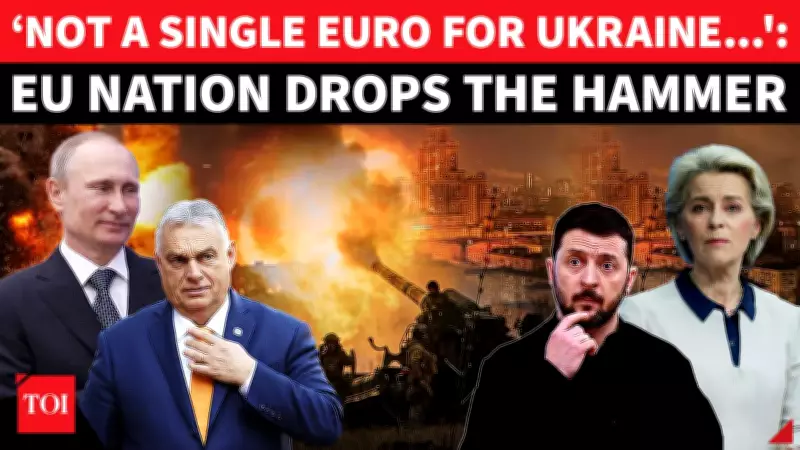
Hungary Halts €90 Billion EU War Loan to Ukraine in Escalating Energy Dispute
In a dramatic move that has sent shockwaves through European Union corridors, Hungary has issued a stunning ultimatum to Ukraine, vowing to block a massive €90 billion EU war loan unless crude oil deliveries through the critical Druzhba pipeline are immediately restored. This bold stance by Budapest represents a significant escalation in tensions between the two nations and poses a direct challenge to EU unity regarding continued support for Kyiv amid the ongoing conflict.
Political Blackmail Allegations and Energy Security Concerns
Hungarian Foreign Minister Peter Szijjarto has leveled serious accusations against Kyiv, characterizing Ukraine's actions as "political blackmail" designed to deliberately disrupt Hungary's energy security. Szijjarto alleges this strategic move is timed to coincide with Hungary's upcoming elections, suggesting a calculated attempt to influence domestic political outcomes through energy manipulation. The Druzhba pipeline, a crucial energy artery that has historically supplied Hungarian refineries with Russian crude oil, has become the central flashpoint in this growing diplomatic crisis.
The Hungarian government now threatens to extend its blockade beyond the war loan, warning it will halt key European Union decisions that would otherwise be favorable to Ukraine. This represents a significant escalation that could potentially paralyze broader EU support mechanisms for Kyiv at a critical juncture in the conflict. The dispute adds fresh strain to already fragile EU unity as member states grapple with differing perspectives on how to balance support for Ukraine against national energy and economic interests.

Broader Implications for European Unity and Ukraine Support
The escalating confrontation raises fundamental questions about the future of European solidarity in supporting Ukraine's defense efforts. With Hungary positioning itself as a formidable obstacle to EU consensus, Brussels faces mounting pressure to intervene and mediate a resolution before this dispute evolves into a deeper fracture within the European bloc. The €90 billion war loan, intended to provide crucial financial support for Ukraine's military and reconstruction efforts, now hangs in precarious balance as diplomatic tensions reach new heights.
This development occurs against a backdrop of increasing complexity in European energy politics, where traditional supply routes have been disrupted by geopolitical realignments following Russia's invasion of Ukraine. Hungary's firm stance underscores the difficult balancing act EU member states must perform between demonstrating solidarity with Ukraine and safeguarding their own national energy security interests. The outcome of this standoff could establish important precedents for how the EU navigates similar conflicts between member state priorities and collective foreign policy objectives moving forward.
As the war continues with no immediate resolution in sight, the Hungarian-Ukrainian pipeline dispute has emerged as a critical test of European resolve and institutional cohesion. Whether Brussels can successfully mediate a compromise or whether this represents the beginning of more profound divisions within Europe over support for Kyiv remains one of the most pressing questions facing European leadership today.