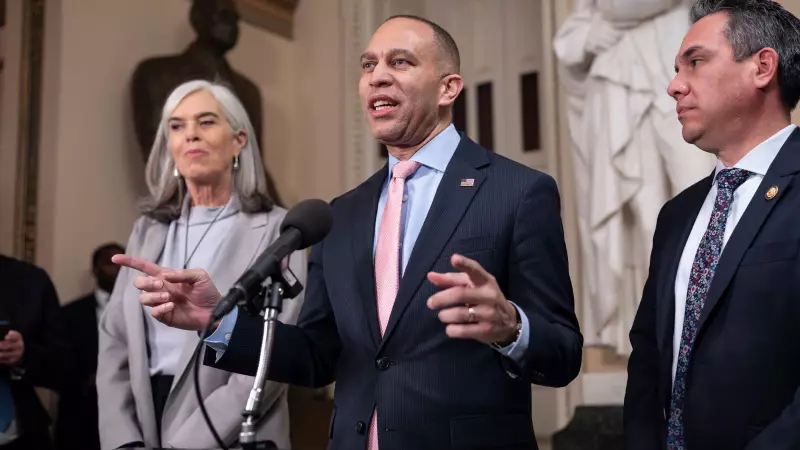
In a significant political maneuver, the United States House of Representatives has passed a crucial bill aimed at extending enhanced subsidies for health insurance plans under the Affordable Care Act (ACA). This legislative action was taken in direct defiance of the Republican Party leadership, setting the stage for a contentious debate in the Senate.
A Defiant Move to Safeguard Health Coverage
The bill, known as the Lower Costs, More Transparency Act, successfully cleared the House on Wednesday. Its primary objective is to prolong the increased premium tax credits that were initially introduced as part of the American Rescue Plan during the COVID-19 pandemic. These subsidies were later extended by the Inflation Reduction Act. Without this new legislative intervention, these critical financial aids are scheduled to expire at the end of 2025.
The passage of this legislation is a strategic effort by Democrats to highlight a key policy difference with Republicans ahead of the upcoming elections. The enhanced subsidies have played a vital role in making health insurance more affordable for millions of Americans, contributing to record-high enrollment numbers in ACA marketplaces. Allowing them to lapse could result in substantial premium increases for countless families.

Bipartisan Support Amidst Leadership Opposition
Interestingly, the bill garnered bipartisan support, passing with a vote of 320-71. This demonstrates that a considerable number of Republican members broke ranks with their own party leadership to support the measure. The Republican leaders had actively urged their members to vote against the bill, framing it as a budget gimmick and an attempt to expand what they term "Obamacare."
Despite this opposition from the top, many Republicans from politically competitive districts saw the practical necessity of supporting the extension. They recognized the potential backlash from constituents facing higher healthcare costs if the subsidies were to disappear. The bill also includes provisions related to hospital pricing transparency and extends funding for community health centers, which added to its appeal for some Republicans.
An Uncertain Future in the Senate
While the House has acted, the bill's journey is far from over. Its prospects in the closely divided Senate remain highly uncertain. Senate Republicans have largely opposed the subsidy extensions in the past, and there is no clear indication that their stance has changed. The Democratic leadership in the Senate will need to navigate complex procedural rules and likely unified Republican opposition to advance the legislation.
This legislative push places the issue of healthcare affordability squarely back on the national agenda. It forces a public conversation about who will bear the cost if these popular subsidies expire. For now, the House vote stands as a political marker, defining a clear contrast between the parties on a issue that directly impacts the financial well-being and health security of American families.
The outcome of this legislative effort will be closely watched, as it has immediate implications for insurance planning and premium calculations for the years beyond 2025. The battle over the Affordable Care Act, it seems, is entering a new chapter.