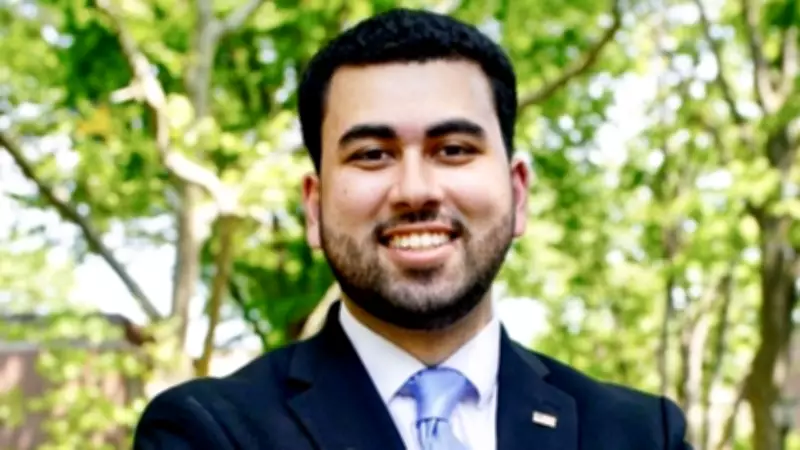
Hindi Campaigning by Indian-American Candidate Ignites Political Controversy in United States
A significant political controversy has erupted in the United States following criticism directed at Indian-origin congressional candidate Jay Vaingakar for conducting campaign activities in Hindi while addressing members of the 'Desi' community in New Jersey. The dispute highlights ongoing debates about language, representation, and identity in American electoral politics.
Social Media Criticism Sparks National Debate
The controversy gained momentum after Indian American commentator Mehek Cooke posted her reaction on social media platform X to a video showing Vaingakar speaking in Hindi about uplifting the "desi community" within the state. Cooke's post accused the candidate of replacing Americans, stating: "A candidate for US Congress is running his ENTIRE campaign in a foreign language. Jay Vaingankar isn't campaigning for Americans — he's campaigning for their replacements. This is not subtle anymore."
Background of Candidate Jay Vaingakar
Jay Vaingakar, a 28-year-old former Biden administration official, is currently contesting from New Jersey's 12th Congressional District. The candidate has recently highlighted strong early fundraising numbers that demonstrate growing support for his campaign. According to official campaign reports, Vaingakar raised nearly $110,000 during the first quarter of 2026, bringing his total fundraising to more than $260,000. This impressive figure includes over $150,000 raised in December 2025 when he initially launched his political bid.

A press release from the campaign emphasized that these funds came primarily from grassroots supporters, with no contributions from corporate political action committees or special interest groups. The average online donation was reported to be $33.44, indicating broad-based community support.
Candidate's Response and Campaign Philosophy
Vaingakar addressed the fundraising success by stating: "We're building this campaign the right way, with real grassroots support from people who want a new generation of leadership in Congress." He further elaborated on his campaign's financial independence, adding: "We're not taking a dime from corporate PACs or special interests, and that means we're accountable to the people we're running to serve. This early support shows that our message is resonating and that we're in a strong position to compete against elected officials twice my age, candidates who have previously run or who have long-established political networks."
Professional Background and Community Roots
Before entering the congressional race, Vaingakar served as a Special Advisor in the Office of Policy at the US Department of Energy. His professional work focused extensively on energy policy, including clean energy initiatives and efforts to improve efficiency while reducing greenhouse gas emissions. The candidate grew up in Hightstown, New Jersey, in a family of immigrant parents and completed his education at the University of Pennsylvania.
Following his academic pursuits, Vaingakar worked as a community organizer and in the community solar sector, concentrating on expanding access to affordable energy solutions for diverse populations. His personal background reflects the immigrant experience, as he was raised by parents who immigrated from Mumbai before his birth.
Campaign Video That Sparked Controversy
The specific campaign video that ignited the current controversy shows Vaingakar speaking in Hindi while addressing the South Asian community, which represents a significant voter demographic in certain parts of New Jersey. This linguistic approach has raised questions about campaign strategies targeting specific ethnic communities while potentially alienating others in a diverse electoral district.
The ongoing debate surrounding Vaingakar's campaign methods continues to generate discussion about appropriate political communication in multilingual societies and the balance between representing specific communities while maintaining broader electoral appeal. As the congressional race progresses, this controversy may influence how candidates approach diverse constituencies and language use in American political campaigns.