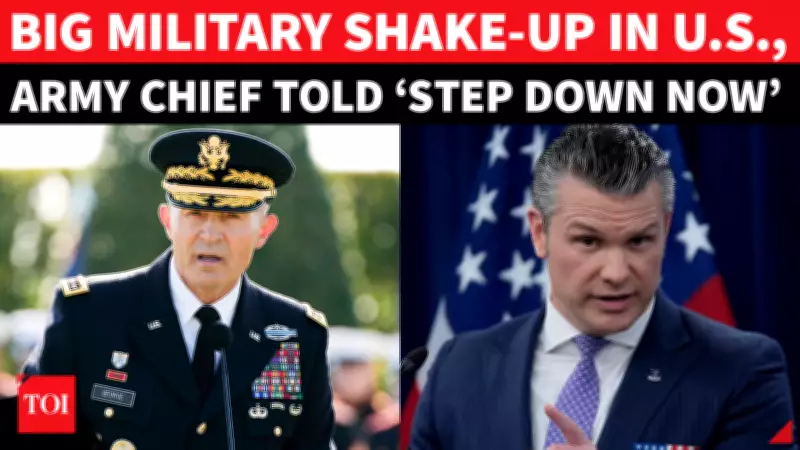
US Defense Secretary Forces Army Chief to Step Down Amid Iran Crisis
In a dramatic and unexpected development, US Defense Secretary Pete Hegseth has demanded the immediate resignation of Army Chief General Randy George. This high-profile dismissal occurs against a backdrop of intensifying military tensions with Iran, raising serious questions about leadership stability within the American armed forces.
A Series of High-Level Military Purges Continues
General George's forced departure represents the latest in a string of senior officer removals under the current administration. Multiple top-ranking generals and admirals have already been ousted or reassigned in what appears to be a systematic overhaul of military leadership. The timing of this shakeup, during a period of international crisis, has amplified concerns both domestically and among global allies.
Critics of the administration's approach are sounding alarms about potential instability within the Pentagon's command structure. They argue that frequent leadership changes could undermine military readiness and strategic coherence at a critical juncture. Conversely, supporters defend the moves as necessary for a strategic realignment of US defense priorities and personnel.

Broader Implications for Global Security
The removal of General George directly coincides with escalating hostilities involving Iran, a situation that some analysts are labeling a "failed" conflict strategy. This military leadership crisis exposes deep fissures in Washington's approach to Middle Eastern geopolitics and its broader national security apparatus.
Key questions now dominate the discourse in Washington:
- How will this leadership vacuum affect US military preparedness?
- What does this mean for ongoing and potential future conflicts?
- How are international allies and adversaries interpreting these internal disruptions?
The situation remains fluid, with observers closely monitoring for further personnel changes and policy shifts from the Pentagon. This development underscores the complex interplay between military leadership, political decision-making, and global security dynamics during times of international tension.