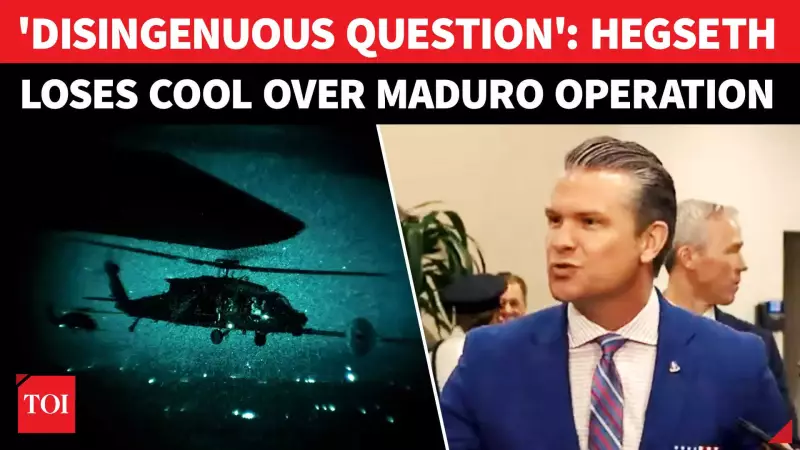
US Defence Secretary Pete Hegseth engaged in a fiery confrontation with a journalist from CNN, sharply criticising the network's line of questioning about the American military mission in Venezuela. The tense exchange occurred on Wednesday, January 8, 2026, following a classified briefing for senators.
A Tense Exchange Over Venezuela Costs
During the interaction, the CNN reporter pressed Hegseth on the financial cost of the ongoing US military intervention in Venezuela. The Defence Secretary reacted strongly, accusing the news network of being "disingenuous" in its coverage. Hegseth firmly defended the operation, labelling it a historic success for the United States.
He argued that critics were deliberately seeking angles to "undermine" the mission's achievements. Instead of dwelling on costs, Hegseth attempted to shift the focus to other global theatres where the US military is actively engaged.

The Oil Strategy Behind the Operation
The remarks came after Hegseth and Secretary of State Marco Rubio outlined significant plans to senators regarding Venezuela's resources. The strategy involves securing a vast quantity of Venezuelan oil—estimated between 30 million and 50 million barrels—as part of the intervention.
This seized oil is intended to be sold on the open market. Officials presented this move as a key component of a broader US strategy to achieve its objectives in the Latin American region, directly linking the military action to economic and energy goals.
Broader Context and Regional Tensions
The public clash with the media underscores the high-stakes and controversial nature of the Venezuela operation. The US government appears to be framing the intervention not just as a political or humanitarian mission, but as a strategic play with direct economic benefits, namely control over vital oil resources.
This incident highlights the administration's aggressive posture towards media scrutiny, especially on sensitive foreign policy matters. The plan to sell confiscated Venezuelan oil on the global market is likely to have significant repercussions for international energy dynamics and regional diplomacy.