Political parties in Greenland have delivered a resounding and unified rejection to former US President Donald Trump's reported attempts to pressure Denmark into selling the massive Arctic island. The rebuke comes after Trump's alleged warnings that securing Greenland could be done "the hard way," a statement that has ignited fierce nationalistic sentiment.
A Unified Front Against External Pressure
Leaders from across Greenland's political spectrum have categorically dismissed the idea of becoming American territory. The issue came to the forefront following reports that Trump, during his presidency and now in his 2024 campaign, has repeatedly expressed interest in purchasing Greenland, viewing it as a strategic asset. His latest comments, suggesting he might pursue a "hard" path if Denmark refused, were seen as a direct threat to the island's current political status.
Aaja Chemnitz Larsen, a Member of the Danish Parliament from Greenland's Inuit Ataqatigiit party, was unequivocal in her response. "We don't want to be Americans. We are proud of being Greenlanders," she stated, capturing the prevailing mood. She emphasized that the people of Greenland have the right to self-determination and are not a commodity to be traded.

The Strategic Stakes in the Arctic
The underlying motivation for Trump's persistent interest is no secret. Greenland's geographic location makes it a critically strategic prize in the rapidly changing Arctic region. As ice melts due to climate change, new shipping routes and access to vast untapped mineral resources are becoming available. The United States, along with Russia and China, is keen to establish a dominant presence in this new geopolitical frontier.
For the US, ownership or greater control over Greenland would mean enhanced military positioning, particularly for its Thule Air Base, and a significant advantage in monitoring Arctic activities. However, this realpolitik calculus clashes directly with the aspirations of Greenland's 56,000 inhabitants, who are increasingly seeking greater autonomy from Denmark itself, not a transfer to another power.
Denmark's Stance and the Path Forward
The government of Denmark, which has held sovereignty over Greenland since the 18th century, has consistently labeled the idea of a sale as "absurd." The relationship is governed by a 2009 self-rule agreement that grants Greenland control over most internal affairs, while Copenhagen handles foreign and security policy. Crucially, any decision on independence would require a referendum among Greenlanders.
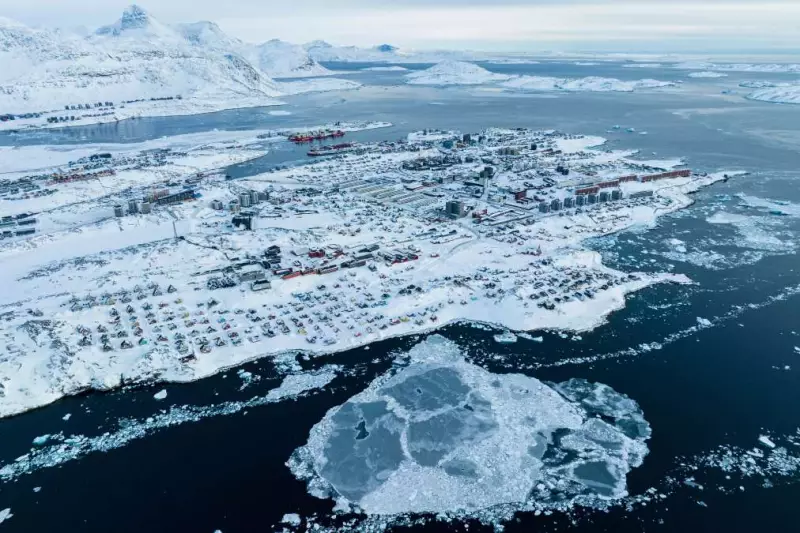
The consensus in Nuuk, Greenland's capital, and in Copenhagen is clear: the island is not for sale. The recent statements from Greenlandic politicians reinforce that any future discussion about the island's status will be led by its own people, not dictated by external pressure or financial offers. The episode has, if anything, strengthened local resolve to determine their own destiny, whether within the Danish realm or as an independent nation in the future.
Trump's tactics, rather than advancing American interests, have backfired by uniting Greenlandic politicians against what they perceive as a colonial-era mindset. The message from the Arctic is stark: sovereignty is not negotiable. As the great powers vie for influence in the High North, the voices of the Arctic's indigenous populations and local governments are demanding to be heard and respected in decisions that will shape their homeland.