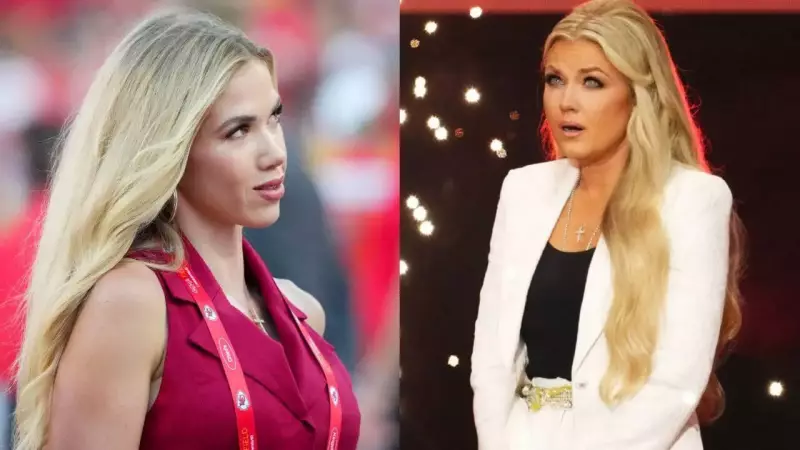
The recent public appearance of Gracie Hunt, heiress to the Kansas City Chiefs, successfully merged the worlds of professional sports, political activism, and popular culture, creating a significant online buzz. Her participation in the conservative youth conference, AmericaFest 2025, organized by Turning Point USA in Phoenix, was far more than a simple social event. It served as a platform for her personal convictions and highlighted her growing influence beyond the National Football League.
A Platform for Faith and Freedom
Gracie Hunt attended the multi-day AmericaFest event, demonstrating her support for fellow conservative commentator Erika Kirk. She shared photos from the conference on social media, dressed in a neutral-toned outfit, and reflected on her experience. In a heartfelt caption, she expressed her gratitude for the event, writing, “Grateful for a powerful few days celebrating faith, freedom, and this incredible country we call home. ??? ‘Blessed is the nation whose God is the Lord.’ — Psalm 33:12.” This statement clearly outlined the values she championed at the gathering.
An Unexpected Cross-Sport Connection
The narrative took an interesting turn with an unplanned social media interaction that captured widespread attention. Among the numerous reactions to Hunt's posts, a comment from Indiana Fever guard Sophie Cunningham stood out. The WNBA star simply dropped two fire emoji, to which Hunt warmly replied, “Right back at you Beautiful!” This brief exchange resonated deeply with fans because it connected two prominent women from vastly different sporting universes—the NFL and the WNBA. It underscored how shared values can forge unexpected and powerful connections across traditional boundaries.

Advocating for Family-Friendly NFL Entertainment
Beyond the conference and the viral interaction, Gracie Hunt also drew significant attention for her recent remarks concerning the future of Super Bowl halftime shows. During an appearance on “The Will Cain Show” on November 19, she voiced support for a more family-friendly approach to the mega-event's entertainment. She praised Erika Kirk's efforts in this direction, stating she respected Kirk for “creating a halftime show for America.”
Hunt elaborated that she believes future halftime performers should better reflect the core values of the NFL and its fanbase. She argued that football itself is the primary attraction and that the league does not need to compromise its character or rely on sensationalism to draw an audience. Hunt expressed concern that certain approaches could alienate a substantial portion of the NFL's dedicated fans, emphasizing a desire for content that aligns with a broader, family-oriented viewership.
This combination of a politically charged public appearance, a viral cross-sport moment, and a pointed commentary on one of sports' biggest stages illustrates Gracie Hunt's evolving role. She is emerging not just as a sports heiress but as a vocal figure influencing conversations at the intersection of sports, culture, and conservative values in America.