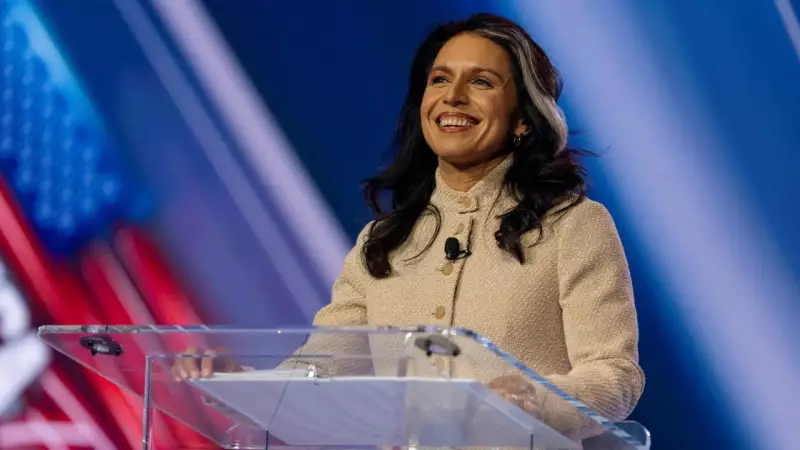
A years-old social media statement from former US Director of National Intelligence Tulsi Gabbard has suddenly regained massive online attention, following the dramatic capture of Venezuelan President Nicolás Maduro by American military forces. Netizens are widely sharing the post with the remark that it "didn't age well," highlighting a stark contrast between her past words and recent US actions.
The Viral Post and Its Context
Back on January 25, 2019, Tulsi Gabbard took to X, the platform formerly known as Twitter, to voice a clear opinion on US foreign policy. "The United States needs to stay out of Venezuela. Let the Venezuelan people determine their future. We don't want other countries to choose our leaders, so we have to stop trying to choose theirs," she wrote. This message has now exploded in popularity once again, coinciding with Washington's confirmation of a significant military operation in Venezuela that resulted in Maduro's arrest and reported bombings in several regions of the Latin American nation.
Gabbard, an Iraq War veteran, has a long-established record of opposing American military intervention abroad. Her political career has been marked by consistent arguments against deploying US troops in other nations, a stance that frequently placed her at odds with both Democratic and Republican administrations. These administrations have historically supported measures like sanctions, pressure campaigns, and regime change efforts against the government in Caracas.

Historical Stance During the 2019 Venezuela Crisis
During the intense political turmoil in Venezuela in 2019, when the United States officially recognized opposition figure Juan Guaidó as the legitimate leader, Gabbard was a vocal critic of American involvement. She warned that such interference would only deepen the instability and suffering experienced by ordinary Venezuelan citizens. Drawing parallels to other conflicts, she argued that foreign intervention seldom leads to genuine democratic outcomes and often precipitates long-term chaos, citing the examples of Afghanistan and Iraq.
This position directly contradicted that of then-President Donald Trump, who had declared Maduro's rule "illegitimate" and recognized Venezuela's opposition-led National Assembly as the country's only legitimately elected government body. The Trump administration actively supported Guaidó and advocated for stronger actions to remove Maduro from power.
Gabbard was not alone in her criticism at the time. Indian-American Congressman Ro Khanna also questioned the Trump administration's approach in 2019, stating, "The United States should not anoint the leader of the opposition in Venezuela during an internal, divided conflict."
Silence and Scrutiny After Recent Events
Following the latest US military incursion into Venezuela, a notable silence has been observed from Tulsi Gabbard. Unlike numerous political leaders from across the spectrum who quickly commented on the invasion, she did not immediately issue a statement. This quiet has been picked up by observant social media users, who have called her out, demanding a response or clarification in light of her very public earlier position.
The resurfacing of this five-year-old post underscores the enduring debate over US foreign interventionism. It highlights the predictable cycle where past warnings from anti-war figures are revisited when military actions materialize. The episode also places Gabbard's principled, non-interventionist ideology under a fresh spotlight, questioning how such beliefs align with the realities of contemporary geopolitical power plays executed by the nation she once served in a top intelligence role.