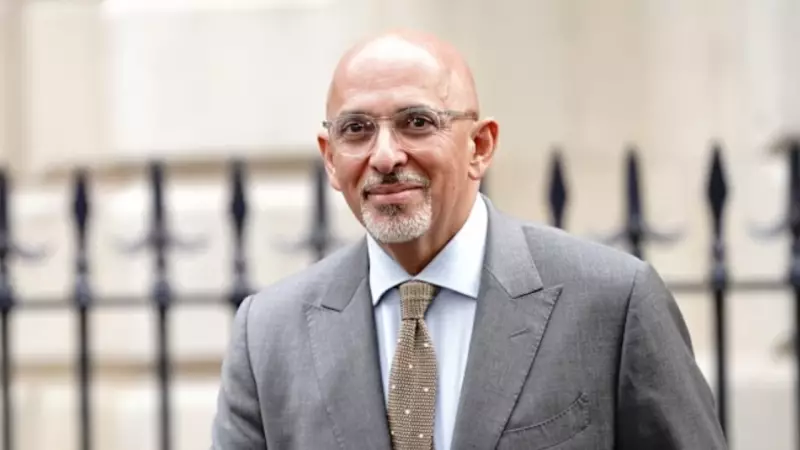
In a seismic shift that has rocked Britain's political landscape, former Chancellor of the Exchequer Nadhim Zahawi has dramatically quit the Conservative Party and pledged his allegiance to Nigel Farage's insurgent Reform UK. Announcing his move at a press conference in London, Zahawi declared the country was at a "last chance saloon" and stated Britain "really does need Nigel Farage as prime minister."
A Defection of Unprecedented Seniority
This is far from a routine political crossover. Zahawi represents the most senior figure ever to defect to Reform UK. He is not a backbench rebel or a marginalised former MP. Instead, he was a central figure of power during Boris Johnson's premiership. Zahawi served as the vaccines minister who oversaw the critical COVID-19 vaccine rollout, later took on the role of Education Secretary, and had a brief but significant tenure running the Treasury as Chancellor. His recruitment signals that Farage's party is now attracting individuals with direct experience of governing at the highest levels, including managing the nation's finances.
Zahawi argued that the team being assembled by Nigel Farage is the only one capable of "getting the country back on track." He expressed his intention to contribute his substantial experience from both government and the business world to help build a credible alternative for governance.

Irony, Reversal, and a Personal Political Journey
The move is laden with striking irony. Back in 2015, Zahawi publicly condemned Nigel Farage on social media, labelling him "offensive and racist" and stating he would be "frightened to live in a country run by you." Standing alongside Farage this week, Zahawi sought to explain away his past comments. He claimed that if he believed Farage had any issue with people of his colour or background, he would not be sharing a stage with him. He reframed Farage not as a threat to integrated immigrants, but as a leader offering a final opportunity to rescue Britain from decline.
Zahawi's personal history has consistently shaped his political outlook. Born in Iraq, he fled to Britain with his family at the age of 11. He frequently references growing up in a nation torn apart by sectarian violence, economic ruin, and instability. At the press conference, he said this formative experience makes him unwilling to "stand by and watch" Britain slide into what he described as a broken, two-tiered society.
Catalyst and Consequences: A Right in Turmoil
Zahawi cited the direction of the new Labour government under Sir Keir Starmer as the final push for his defection. He claimed he was dragged back into politics by Labour's "dangerous direction," including its hesitancy to leave the European Convention on Human Rights, proposals to scrap jury trials, and an "impending debt trap." In his narrative, Reform UK has evolved from a protest vehicle into the sole political force willing to break a failing system.
The reaction from his former colleagues was swift and scathing. Conservatives dismissed Reform as a refuge for "has-been politicians" seeking relevance, pointedly reminding everyone of Zahawi's past criticisms of Farage. The Labour Party went further, branding him a disgraced figure and accusing both Zahawi and Farage of shameless opportunism and toxic politics.
This criticism touches on Zahawi's primary vulnerability. In January 2023, he was sacked as Conservative Party chairman after an inquiry found he failed to properly disclose that HM Revenue & Customs was investigating his tax affairs. The scandal severely damaged his standing within the Tory establishment and left him politically wounded even before he stepped down as an MP in the last general election.
Since leaving Parliament, Zahawi had been working in the private sector. His sudden re-entry into politics wearing Reform colours underscores how rapidly the centre of gravity is shifting on the British right. Reform has been steadily attracting defectors from the Conservatives, including sitting MPs. However, Zahawi brings something unprecedented to Farage's project: a politician who has sat in the Cabinet, run major government departments, and signed off on national budgets.

The critical question now is whether this acquisition makes Reform UK appear as a credible government-in-waiting or merely a recycling bin for damaged Tory heavyweights. The answer will define the next phase of British politics. One fact is undeniable: the old boundaries of the Conservative right have utterly collapsed. When a former Chancellor campaigns for Nigel Farage, it reveals just how strange and volatile the nation's political moment has become.