The autonomy of the United States Federal Reserve, a cornerstone of global financial stability, is facing severe political headwinds. As the world grapples with persistent inflation, soaring fiscal deficits, and an unprecedented artificial intelligence investment boom, a critical question looms: will America's central bank be permitted to execute its mandate without political interference?
The Assault on Institutional Independence
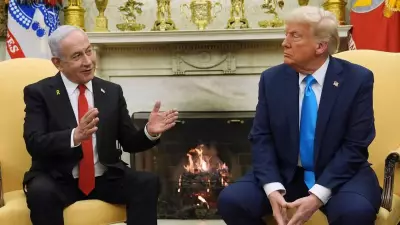
Historically, the US Congress designed the Federal Reserve to operate based on expert, apolitical judgment in the public interest. However, the second administration of President Donald Trump has actively challenged this foundational principle. The White House has asserted that all interpretations of law and reviews of agency expenditures, including those of the Fed, fall under the purview of the executive branch.
This shift is not merely theoretical. The administration has taken direct control of the Fed's regulatory policy, overseeing critical areas like bank capital and leverage requirements. While the White House may claim monetary policy decisions remain separate, this distinction holds little practical weight. Banking regulations on leverage, capital, and reserves are intrinsically linked to the money supply and credit availability—the very heart of monetary policy.

The politicization extends to personnel. Stephen Miran, chair of the White House Council of Economic Advisers, has been confirmed to the Fed's board while merely on leave from the president's team. By May, when a new Fed chair is seated, a majority of the board will be Trump appointees. Furthermore, the Justice Department has argued that regional Fed bank presidents, who vote on the Federal Open Market Committee, serve at the board's pleasure and can be removed anytime.
Economic Ice Gets Thinner
This erosion of independence collides with a precarious economic landscape. Core inflation (PCE excluding food & energy) remained stubborn at 2.9% through August 2025. Trump's sweeping tariffs, which hiked the average effective rate from 2.4% to 18%, exert continuous upward pressure on prices.
The fiscal outlook is equally concerning. Despite workforce cuts, federal spending rose 4% in FY2025, with the deficit at 5.9% of GDP. Public debt reached $30.3 trillion, or 99% of GDP, by September 30, 2025. The 'One Big Beautiful Bill Act' is predicted to push average deficits to 6.1% of GDP through 2035, ballooning debt to 120% of GDP. Annual interest payments have already crossed the $1 trillion mark, exceeding defense spending.
Compounding these challenges is a data fog. Government shutdowns and statistical agency turmoil have delayed key economic releases, forcing markets and policymakers to rely on incomplete private data. The dangerous mix of sticky inflation, tariff uncertainty, a weak fiscal position, and perceived political influence over the Fed risks unanchoring inflation expectations and steepening yield curves.
The AI Frenzy and Financial Fragility
Simultaneously, an AI-driven market exuberance presents its own risks. US equity markets hit a record $69 trillion by October 20, 2025—225% of GDP. Concentration is extreme: the top ten companies, eight of them tech firms, make up 40% of the S&P 500. The valuation of the top four—Nvidia, Microsoft, Apple, and Alphabet—roughly equals the total market cap of all EU-listed companies.
JPMorgan estimates AI-related capital expenditure contributed 1.1 percentage points to US GDP growth in H1 2025, outpacing consumer contribution. Bank of America expects AI capex to exceed $400 billion this year. However, a significant mismatch exists between massive investments and current modest AI revenues. This web of financing among chip, cloud, and AI model providers is unprecedented in scale and interconnectedness, relying on uncertain future revenue growth.
A geopolitical shock or a shortfall in expected AI returns could trigger severe market corrections. Undermining central bank independence and easing financial regulations only amplifies these systemic risks.

Global Trust in the Dollar at Stake
The ultimate casualty may be the US dollar's global primacy. Its dominance rests on trust, deep capital markets, and safe assets like Treasury securities—all underpinned by strong institutions and the rule of law. A key pillar is the Fed's reliable, technocratic provision of global dollar liquidity through tools like international swap lines.
This trust is now in question. The Trump administration's transactional approach to alliances and tariffs has sown doubt about its willingness to backstop global dollar liquidity apolitically. When the White House tied US Treasury support for Argentina to its midterm election outcome, global central bankers and investors took note. If markets perceive dollar support depends on political alignment, they will price a risk premium into the currency itself.
While the Supreme Court may yet legally distinguish the Fed from other agencies, its substantive independence has already been impaired. The precedent of the 1970s, when President Nixon pressured the Fed to keep rates low, serves as a stark warning of the inflationary consequences.
As the Fed navigates this complex rink of economic challenges with compromised autonomy, the world watches. The ability of its next chair to 'skate to where the puck is going'—free from political dictates—will be crucial not just for America, but for the stability of the entire global financial system.