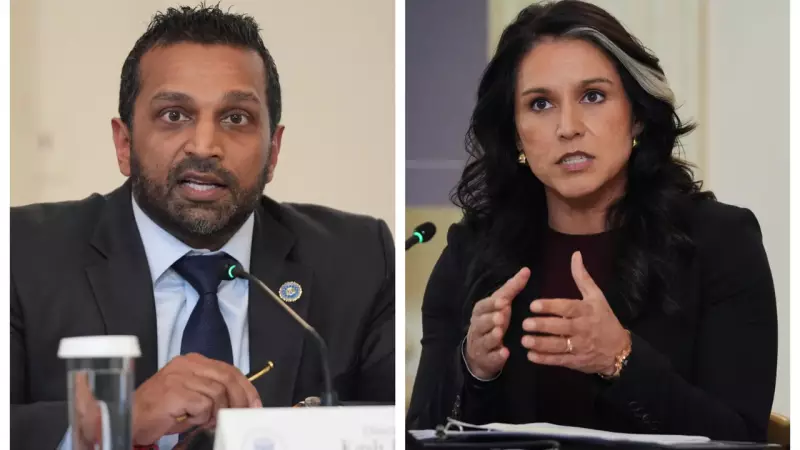
Significant internal tensions have emerged within US intelligence agencies regarding the investigation into conservative commentator Charlie Kirk's assassination, with FBI Director Kash Patel expressing serious concerns about access to sensitive case files.
Inter-Agency Conflict Over Case Files
According to a New York Times report, FBI Director Kash Patel was reportedly alarmed when Joe Kent, who reports to Director of National Intelligence Tulsi Gabbard, examined FBI case files related to the Charlie Kirk shooting incident. Patel and other FBI officials believed that Kent, who serves as director of the National Counterterrorism Center, was overstepping his authority by accessing these sensitive materials.
The situation created what sources described as simmering tension between Patel and Tulsi Gabbard, though FBI representatives later pushed back against these claims, dismissing them as mere rumors without substance.

Search for Foreign Connections
Reports indicate that Joe Kent was specifically looking for any information that might connect Charlie Kirk's assassination to foreign groups or terrorist organizations. This search appeared to align with theories suggested by some conservative commentators, including conspiracy theorist Candace Owens, who had questioned whether the shooting was purely the work of a lone individual.
The conflict escalated to the point where Kent met with Patel at the White House, with Vice President JD Vance and DNI Tulsi Gabbard also present. Sources confirmed that Patel expressed his dissatisfaction with Kent's investigation into the case files during this high-level meeting.
Investigation Background and Legal Proceedings
Tyler Robinson stands arrested and charged with killing Charlie Kirk, with the FBI maintaining that he acted alone in the assassination. Investigators have produced text messages as evidence supporting their single-shooter theory.
However, many conservative activists and political figures remain skeptical of this narrative, arguing that given Kirk's significant political importance and influence, the assassination was unlikely to be a one-person operation without broader connections or motivations.
The tension between Patel's office and Gabbard's office became so intense that two separate meetings had to be convened to address the issues, with the first meeting reportedly achieving little progress toward resolution.
Institutional Protocols and Responses
The New York Times report highlighted that the FBI and Justice Department typically maintain strict control over evidence in criminal cases, particularly during trial preparation phases. This control is essential because government documents may eventually need to be disclosed to defense teams, who could use them to challenge the prosecution's case.
Contrary to the NYT's reporting, Fox News presented a different perspective, stating that no significant feud existed between the departments and that the reported tensions were exaggerated. Both agencies ultimately share the common goal of achieving justice for Charlie Kirk, according to this counter-narrative.
In legal developments, Tyler Robinson has not pleaded guilty to the charges against him. Prosecutors have announced their intention to seek the death penalty under Utah law, citing aggravating circumstances in the case that warrant the maximum punishment.
The situation continues to develop as both the criminal proceedings and inter-agency discussions progress, with multiple stakeholders watching closely how the investigation unfolds and whether additional connections to the shooting emerge.