Europe Faces Tough Choices as Greenland Dispute Escalates
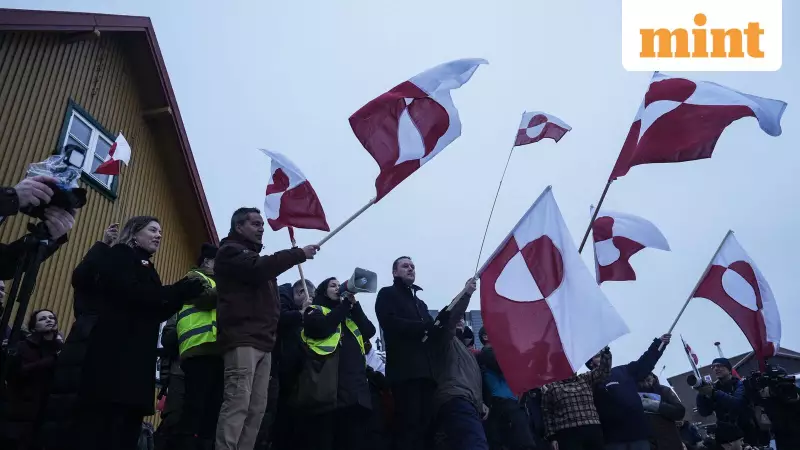
European leaders are scrambling to find a unified response after President Donald Trump threatened to impose tariffs on eight European countries. The controversy centers on a small troop deployment to Greenland that has sparked an unexpected transatlantic crisis.
Trump's warning came over the weekend when he proposed a 10% tariff rate on countries that sent military personnel to Greenland. This move has left European politicians furious and searching for appropriate countermeasures.
European Outrage and Diplomatic Tensions
French President Emmanuel Macron delivered a strong rebuke to the American threats. "No intimidation nor threat will influence us," he declared firmly. "This applies to Ukraine, to Greenland, and to every other situation."

Swedish Prime Minister Ulf Kristersson and European Commission President Ursula von der Leyen joined the chorus of criticism. They expressed deep concern about an ally using economic pressure against NATO members.
The situation has grown so serious that European leaders might convene an emergency summit as early as January 19th. They face the challenging task of coordinating 27 EU members plus Britain, Norway, Iceland, and Ukraine.
The Greenland Deployment and Italian Mediation
Italy's Prime Minister Giorgia Meloni attempted to defuse tensions through direct communication with Trump. She suggested the American president might have misunderstood the purpose of the Greenland deployment.
The troop movement actually represented a symbolic gesture at Denmark's request. European officials presented it as an effort to strengthen military presence in the Arctic region, something Trump had previously requested.
Meloni described the proposed tariffs as "a mistake" while acknowledging Europe's message about Greenland might have been unclear from Washington's perspective.
Trade Retaliation Options and Complications
For European leaders seeking to send a strong message to America, trade retaliation presents the most straightforward option. European parliamentarians have already indicated they will suspend the Turnberry Agreement.
This trade deal, signed last summer, allowed Europe to accept a 15% tariff rate without immediate retaliation. If Trump follows through on his threat, EU exports to America could face rates of 25% or higher.
The European Union has prepared retaliatory tariffs targeting approximately €93 billion worth of American goods. These measures were originally developed in response to tariff increases last spring.
However, Europe faces a significant complication. The EU remains hesitant about aggressive trade actions because of ongoing concerns about Ukraine. America continues to play a crucial role in supplying Patriot missiles and intelligence capabilities.
The Anti-Coercion Instrument and Internal Divisions
Should Europe decide American threats outweigh Ukrainian security concerns, officials could deploy their most powerful economic weapon. The anti-coercion instrument allows unprecedented flexibility in responding to coercive behavior.
France and some European Parliament members advocate using this instrument. Yet other member states worry about potential escalation once such measures begin.
The process would require weeks of assessment, countermeasure development, and voting. During this period, Trump might introduce additional complications to an already tense situation.
Coalition Challenges and Special Cases
Building a united European front proves particularly challenging with certain countries. Poland traditionally maintains strong pro-American sentiments, relying on U.S. protection against Russian influence.
The Polish government shows internal divisions between Prime Minister Donald Tusk and President Karol Nawrocki. Tusk previously warned that American seizure of NATO territory would represent "the end of the world as we know it."
Meanwhile, Nawrocki described the Greenland dispute as primarily a matter between Danish and American leaders. Hungary's Prime Minister Viktor Orban expressed similar views.

Britain's Delicate Position
Britain faces its own complications as a non-EU member with independent tariff policies. Prime Minister Keir Starmer previously emphasized Britain's special relationship with America, noting his country was first to strike a deal with Trump last spring.
Recent developments have revealed that America often groups Britain with the EU during trade disputes. Starmer now describes Trump's tariff threats as "completely wrong," marking a shift from his previously cautious approach.
Opposition leader Kemi Badenoch agrees the tariffs represent a "terrible idea." Nigel Farage of Reform UK cancelled a television appearance, citing health reasons amid the growing controversy.
Starmer spoke directly with Trump on January 18th, emphasizing that "applying tariffs on allies for pursuing collective NATO security is wrong." Britain now faces difficult decisions about coordinating with Europe on security while maintaining independent trade negotiations.
Broader Implications for Western Leadership
The Greenland conflict represents more than a simple trade dispute. It threatens America's traditional leadership role in Western alliances. European commitment to NATO and transatlantic cooperation remains strong, but trust in American reliability has diminished.
Canada recently announced enhanced strategic partnership with China, a move interpreted as defensive positioning against its powerful neighbor. Meanwhile, the eight countries involved in the Greenland deployment issued a joint statement reaffirming their sovereignty commitments.
What began as quiet decoupling between Europe and America grows increasingly audible. The Greenland controversy exposes fundamental tensions in transatlantic relations that extend far beyond Arctic troop deployments.
European leaders now confront difficult calculations about balancing economic responses with security considerations. Their decisions in coming days will shape NATO's future and redefine Western alliances in an increasingly uncertain global landscape.