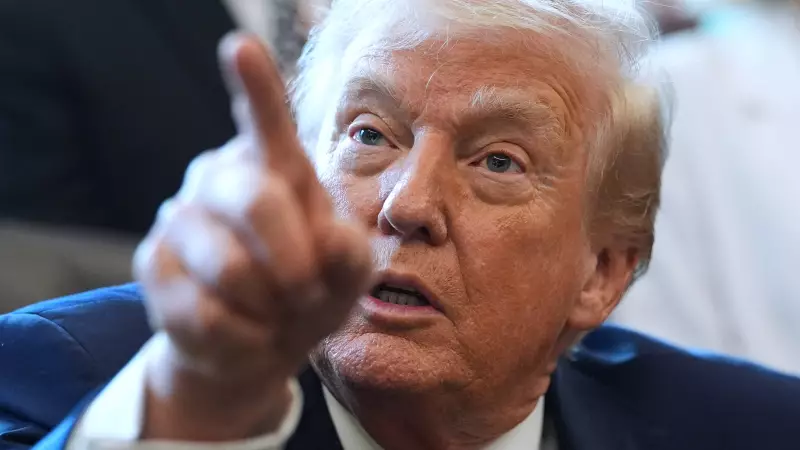
In a striking statement that has reignited concerns over US foreign policy in Latin America, former President Donald Trump has declared he does not rule out going to war with Venezuela. The comments, made during a recent interview, signal a potentially aggressive shift should he return to the White House after the November 2024 presidential election.
Trump's Stark Warning on Venezuela
When directly questioned about the possibility of a military conflict with the South American nation, Trump's response was unambiguous. "I don't rule it out," he stated, framing the country as a significant problem for the United States. He contrasted Venezuela's current economic and social crisis with its vast natural wealth, particularly its oil reserves, which he described as "greater than almost any other nation in the world."
The former president expressed frustration with the current state of affairs, arguing that Venezuela's immense potential is being squandered. His remarks underscore a return to the maximum pressure tactics that characterized his first term, during which his administration recognized opposition leader Juan Guaidó as the legitimate president and imposed crippling sanctions on Nicolas Maduro's government.

Criticism of Biden's Approach and a Vision for Oil
A central pillar of Trump's critique targeted the foreign policy of President Joe Biden. He accused the current administration of failing to leverage America's influence effectively in the region. Trump suggested that a more forceful US stance could fundamentally alter Venezuela's trajectory, implying that regime change or significant political concessions could be achieved through heightened pressure.
Beyond geopolitics, Trump's comments revealed a keen commercial interest. He painted a picture of a revitalized Venezuelan oil industry, open to American investment and expertise. "We could make a deal, and they have tremendous potential," he said, highlighting the economic incentives behind his strategic thinking. This perspective aligns with his long-standing emphasis on energy dominance and deal-making as core tenets of foreign policy.
Context and Potential Consequences
These warnings come at a delicate time. Venezuela is scheduled to hold a presidential election on July 28, 2024. The electoral process is already fraught with tension, following an agreement between Maduro's government and the opposition to hold a competitive vote. However, the disqualification of prominent opposition figures has cast doubt on the election's fairness.
Trump's rhetoric raises the specter of a dramatic escalation in US-Venezuela relations. A return to the harsh sanctions and bellicose language of his first term could destabilize the fragile political process in Venezuela. Furthermore, the explicit mention of military action, even as a non-dismissible option, introduces a volatile element into regional security calculations.
The international community, particularly regional powers in Latin America, is likely to view such threats with severe alarm, potentially fracturing diplomatic efforts to resolve the Venezuelan crisis peacefully. For the Venezuelan people, already enduring a prolonged humanitarian emergency, the prospect of renewed maximum pressure or conflict presents a daunting future.
As the US election campaign intensifies, Trump's stance on Venezuela establishes a clear foreign policy contrast with the Biden administration, which has pursued a more nuanced strategy involving targeted sanctions relief in exchange for democratic commitments. The world will be watching to see if this campaign trail warning translates into a concrete and confrontational policy in 2025.