A recent social media post has delivered a sharp, data-driven rebuttal to Florida Governor Ron DeSantis's inflammatory characterisation of H-1B visa holders as "invaders." The post, gaining significant traction online, argues that such politically charged language is misleading and ignores the critical economic role these skilled professionals play, especially in states like Florida that are grappling with acute labour shortages.
The Core Argument: Data Versus Political Rhetoric
The viral critique systematically dismantles the governor's narrative by presenting employment and workforce statistics. It emphasises that H-1B visa holders constitute only a minuscule portion of the total US workforce. These individuals are not a flood of labour but a highly targeted stream, concentrated in specialised sectors where America faces a well-documented talent crunch. The post lists software engineering, healthcare, scientific research, higher education, and advanced manufacturing as the primary fields where these professionals contribute.
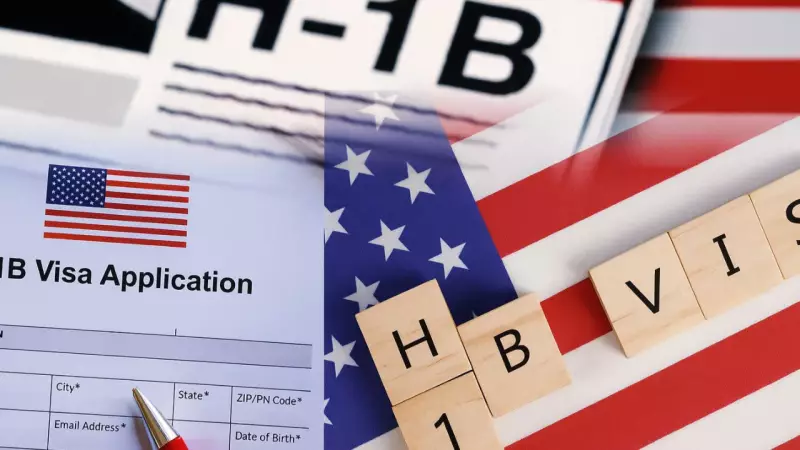
Furthermore, the argument highlights the strict regulatory framework governing the H-1B programme. It is not an open-door policy but a controlled system defined by annual numerical caps, mandatory employer sponsorship, and specific wage rules designed to ensure foreign workers are not used to undercut the salaries of American employees. Portraying this tightly managed programme as an "invasion," the post contends, is a gross misrepresentation of facts.

Florida's Economic Reality: Growth Meets Talent Gap
The criticism gains particular relevance when examining Florida's own economic landscape. The state has experienced rapid economic expansion in recent years, but this growth has been accompanied by persistent and troubling shortages in skilled roles. Industry associations and business leaders have consistently warned that demand for specialised talent in STEM (Science, Technology, Engineering, and Mathematics) and medical fields far exceeds the local supply.
This gap creates a practical problem for Florida's businesses and institutions. The post argues that H-1B professionals often help fill positions that remain vacant for extended periods, supporting innovation, healthcare delivery, and academic research. By framing these individuals as a threat, the political rhetoric overlooks their role in sustaining the state's economic momentum and addressing critical workforce needs.
Political Theatre Versus Policy Substance
Ultimately, the social media analysis frames Governor DeSantis's language as political theatre, aimed more at energising a specific voter base than engaging with the nuanced realities of immigration and labour economics. It creates a stark contrast between hardline rhetoric and the evidence-based structure of the federal H-1B programme, which is driven by employer demand and capped entry, not by "mass" or "open border" policies.
The debate underscores a growing tension in American politics, where immigration discourse often clashes with economic data. As states compete for talent in a globalised economy, the post suggests that characterising essential skilled workers as adversaries is counterproductive, especially for a state like Florida that relies on innovation and specialised services for its continued prosperity.