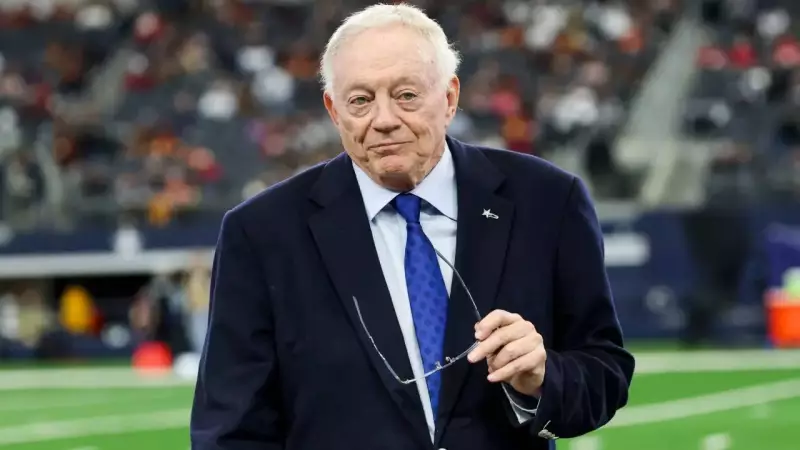
The atmosphere surrounding the Dallas Cowboys as they enter the offseason is one of immense pressure, not hope. For the second consecutive year, the storied franchise has missed the playoffs, finishing with a disappointing 7-9-1 record. This extends their Super Bowl drought to a staggering 30 seasons, a fact that weighs heavily on owner and general manager Jerry Jones.
A Roster in Flux: The 22-Contract Conundrum
At his end-of-season press conference, the 83-year-old Jones did not mince words. He ruled out a quiet approach, signalling turbulent times ahead. The core of this upheaval is the 22 player contracts set to expire when the new NFL league year begins in March. This presents one of the most complex roster management challenges of Jones's long tenure.
These expiring deals fall into three critical categories, each with different implications. The most volatile group is the Unrestricted Free Agents (UFAs). Players like wide receiver George Pickens, running back Javonte Williams, and defenders Jadeveon Clowney and Donovan Wilson, who have four accrued seasons, can sign with any team. Dallas risks losing them without new contracts or franchise tags.

The Restricted Free Agents (RFAs), including kicker Brandon Aubrey, offer the Cowboys more control through tender offers, allowing them to match outside offers or receive draft compensation. The simplest are Exclusive-Rights Free Agents (ERFAs) like Josh Butler; a minimum one-year offer secures them for Dallas with no external bidding.
This situation also brings immediate salary cap flexibility. Each expired deal clears cap space until that money is reallocated, a crucial factor following the in-season trade of star defender Micah Parsons, which significantly altered the team's financial landscape.
Jones's 'Dramatic' Pledge and the Path Forward
Jerry Jones has openly acknowledged the high stakes. He stated a clear desire to improve drastically and even hinted at "busting the budget" to achieve immediate success. He promised more dramatic moves, referencing the Parsons trade as a precedent for the kind of controversial decisions he is willing to make.
Offensively, the Cowboys were not the problem. The team ranked seventh in points per game and second in total yards. Quarterback Dak Prescott threw for over 4,000 yards, while receivers CeeDee Lamb and George Pickens both eclipsed 1,000 receiving yards. Javonte Williams also rushed for over 1,000 yards.
The season's collapse was squarely on the defence. The unit allowed a franchise-record 511 points, a catastrophic failure that led to the firing of defensive coordinator Matt Eberflus. Head coach Brian Schottenheimer has confirmed the team is interviewing candidates, open to both experienced and first-time coordinators.
The Urgency of Time: An Owner's Final Quest?
The urgency for Jones is deeply personal. He turns 84 in October and has repeatedly stated his goal is to retire as the owner with the most championships. With three Super Bowl titles, he trails New England's Robert Kraft, who has six. Jones sees a window of opportunity with quarterback Dak Prescott in his prime and is determined to capitalise.
Retaining George Pickens is a top priority for stability. After a standout season with 93 catches for 1,429 yards and nine touchdowns, securing him long-term is crucial, with the franchise tag a potential option for 2026 if needed.
Despite the bleak outlook, Jones believes the roster is closer to contention than it appears. He pointed out that six teams that missed the playoffs last year made it this season, proving a quick turnaround is possible. However, the reality for Dallas is undeniable: 22 contracts, a coordinator search, a historically bad defence, and an owner whose patience has run out. The drama Jerry Jones promised is already underway.