Cuban President Miguel Díaz-Canel has firmly stated that no conversations are currently taking place between his government and the United States administration. This declaration comes as a direct response to recent threats made by former US President and current presidential candidate, Donald Trump.
Díaz-Canel Responds to Trump's Campaign Rhetoric
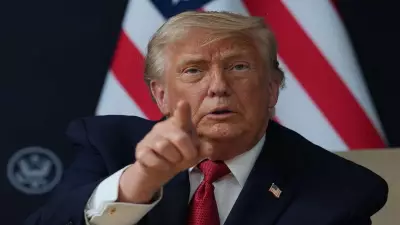
Addressing the media in Havana on Tuesday, President Díaz-Canel clarified the state of bilateral communications. His comments were prompted by statements from Donald Trump, who, during his election campaign, has repeatedly threatened to reinstate Cuba on the US list of state sponsors of terrorism if he returns to the White House.
The Cuban leader emphasized that while his nation is open to discussion, it must be based on mutual respect and sovereign equality. "We are not afraid of dialogue," Díaz-Canel asserted, highlighting Cuba's consistent position. He pointed out that the island nation has long sought a normal relationship with its powerful northern neighbour, but one that does not compromise its independence or political system.

The Shadow of the US Terrorism List
The core of the current tension revolves around the US State Sponsors of Terrorism (SSOT) list. The administration of President Joe Biden removed Cuba from this list in May 2022, reversing a last-minute decision by the outgoing Trump administration in January 2021. This designation carries severe economic and financial penalties, restricting international aid and complicating banking relations.
Trump's campaign has vowed to return Cuba to the list, a move Díaz-Canel labelled as "political blackmail." The Cuban president argued that such a designation is unjustified and politically motivated, noting that Cuba itself has been a victim of terrorism and actively collaborates on international counter-terrorism efforts.
A Call for Consistent and Respectful Diplomacy
Díaz-Canel used the opportunity to critique the erratic nature of US policy towards Cuba, which has oscillated significantly between different American administrations. He expressed a preference for a stable and predictable framework for relations, rather than one subject to the whims of domestic US politics.
"What we ask for is simple," the President stated. "Respect for our right to self-determination and an end to the economic blockade that has caused so much suffering for the Cuban people." He reiterated that Cuba is willing to discuss any topic, including human rights and democracy, but only in a context of reciprocity and without preconditions.
The situation underscores the fragile state of US-Cuba relations, which saw a brief thaw under the Obama administration before tightening again under Trump. The Biden administration has taken some limited steps to ease restrictions, particularly on travel and remittances, but the broader US embargo remains firmly in place.
As the US presidential election in November 2024 approaches, the future of this bilateral relationship hangs in the balance. The outcome will likely determine whether the two countries move towards a path of increased engagement or return to a period of heightened confrontation and punitive measures.