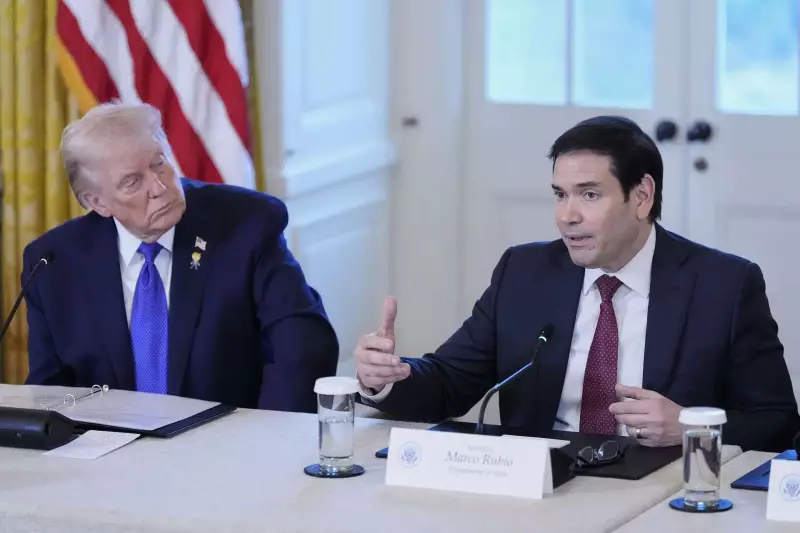
The dramatic removal of Venezuelan strongman Nicolás Maduro by US forces in January 2026 marked a defining foreign policy victory for Donald Trump in his second term. While the operation's immediate target was Caracas, its true origins lie decades earlier and hundreds of miles away, in the heart of South Florida's Cuban exile community. To fully grasp why Venezuela became the focus of a full-scale American intervention, one must first understand the enduring shadow of Cuba and the political worldview of Senator Marco Rubio.
The Exile Lens: A Worldview Forged in Loss
Cuban exile politics in Florida transcends the fate of a single island nation. It represents an ongoing revolution, a story that never reached its conclusion for families who fled Fidel Castro's takeover. In cities like Miami, the dream of Havana's liberation evolved from a memory into a potent, emotional mission that shaped an entire political culture. Here, anti-communism is not merely a policy stance but a core part of moral identity.
This environment framed how every leftist government in Latin America was perceived, seen through a familiar pattern of populist rise and authoritarian consolidation. Marco Rubio's political education was rooted in this world, shaped not by abstract theory but by personal narratives of a homeland lost and a belief that the United States had left the job unfinished since the 1961 Bay of Pigs invasion. For him and his community, Cuba was not a closed chapter of history but an open wound.

Venezuela Becomes "Cuba Replayed"
The rise of Hugo Chávez in 1998 set off immediate alarm bells within the Cuban exile community. They recognized a familiar blueprint: a populist leader dismantling institutions, championing class struggle, and rapidly aligning with Havana. As Venezuela descended into economic ruin and authoritarian rule under Chávez and his successor, Nicolás Maduro, a massive exodus followed.
Hundreds of thousands of Venezuelan refugees settled in Florida, where their trauma and political outlook merged seamlessly with the existing exile culture. The narratives of Cuba and Venezuela fused into a single story. To this community, Venezuela's crisis was not an isolated tragedy but a repeat of the Cuban revolution on the South American mainland. Senator Rubio, ascending through Florida politics to the US Senate, internalized this perspective. In his view, Maduro was not just another dictator but a direct strategic extension of Havana's influence.
From Sanctions to Strategic Extraction
During Trump's first administration, Rubio was a relentless advocate for a maximum-pressure campaign against Maduro's regime. Despite severe sanctions and support for opposition figures, the government in Caracas held firm. The international push for change stalled. The pivotal shift occurred in Trump's second term. Rubio's objective remained the same, but his argument evolved.
Recognizing that appeals to democracy and human rights held less sway, he successfully reframed Venezuela as an urgent national security threat to the United States. He highlighted issues like drug trafficking corridors, expanding Russian military influence, Chinese economic penetration, and transnational criminal networks. This new framing presented action not as a democratic nation-building exercise but as a necessary strategic move to protect American interests in its own hemisphere. This logic ultimately paved the way for the 2026 extraction operation, which was sold as a strategic necessity rather than a humanitarian rescue.
The Cuba Shadow and a Warning to Havana
In Havana, the message of Maduro's fall was received loud and clear. Venezuela had been Cuba's crucial economic partner for years, providing subsidized oil and security cooperation. The operation in Caracas was therefore a direct blow to Havana's lifeline and a stark warning. President Trump made the threat explicit, urging Cuba's leaders to negotiate or face consequences. For Rubio, this moment was the culmination of a lifelong political project.

Within the exile community, Maduro's ouster revived a long-held conviction: if the regime in Caracas could fall, the one in Havana must be next. Supporters of the hardline policy argue it brought decisive clarity to a region suffering under corruption and authoritarian misrule. Critics, however, see a foreign policy overly influenced by inherited trauma, one that risks simplifying complex nations into symbolic stand-ins for a conflict that began in 1959.
Ultimately, the Trump administration's Venezuela policy was about more than oil, migration, or regional power plays. It was equally about history, identity, and a political culture forged in the profound loss of exile. Nicolás Maduro was removed not simply because Venezuela failed as a state, but because, through Marco Rubio's exile lens, Venezuela had effectively become Cuba. And for over half a century, that is the one story he has been determined to see through to its end.