Violent Coffee Attack in Michigan McDonald's
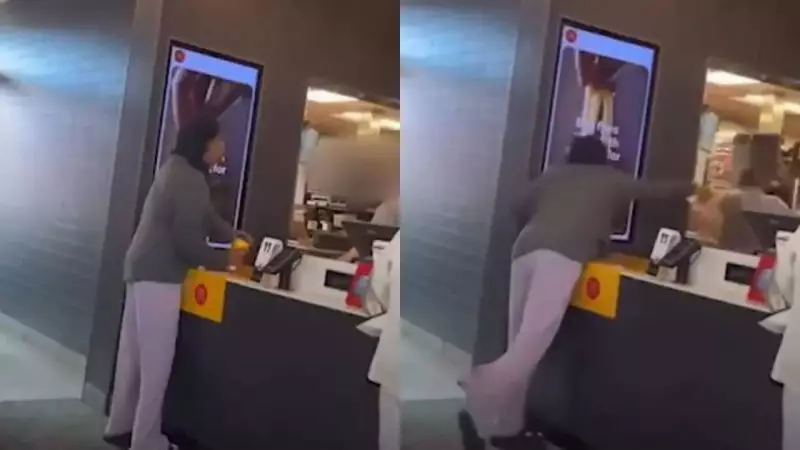
A shocking incident unfolded last week at a McDonald's restaurant in Michigan where an angry customer lost her patience after waiting more than an hour for her online order. The situation escalated dramatically when 48-year-old Casharra Brown threw a large cup of boiling coffee directly at the manager.
CCTV footage captured the entire disturbing scene showing Brown tearing off the lid, leaning aggressively across the counter, and hurling the scalding liquid straight at the manager's back. Witnesses reported she shouted "Catch that hot-a-- coffee!" during the attack before leaving the premises.
Police quickly identified and located Brown after the video went viral on social media platforms. Fortunately, the manager escaped with minor burns, but the incident immediately triggered memories of another, much more famous coffee-related case that became embedded in American legal history.

The Original McDonald's Coffee Scandal: Stella Liebeck's Story
Rewind to 1992 in Albuquerque, New Mexico, where 79-year-old grandmother Stella Liebeck purchased a 49-cent cup of coffee from a McDonald's drive-through. Her grandson parked the car so she could add cream and sugar to her drink. Since the vehicle lacked cup holders, Liebeck placed the coffee between her knees while attempting to remove the lid.
The hot coffee spilled dramatically, soaking her cotton sweatpants and trapping the scalding liquid against her skin. Within seconds, Liebeck suffered third-degree burns on her thighs and groin area that required eight days of hospitalization and extensive skin graft surgery.
Her medical expenses totaled approximately $10,000, and when McDonald's refused her request for $20,000 to cover her costs and additional damages, she pursued legal action. What emerged during the trial would shock the nation and change fast food warning labels forever.
Revealing Testimony and Corporate Negligence
During court proceedings, Liebeck's legal team uncovered that McDonald's corporate policy required coffee to be served at 180 to 190°F - significantly hotter than coffee typically served at home or in most other restaurants. Expert witnesses testified that coffee at this extreme temperature could cause third-degree burns in just three seconds of skin contact.
Even more alarming was the revelation that McDonald's had received more than 700 previous complaints about burns from their coffee before Liebeck's incident. The company's quality control manager had dismissed this number as "insufficient" to warrant changing their serving temperature policy.
The jury found McDonald's 80 percent responsible for the incident and awarded Liebeck $160,000 in compensatory damages plus $2.7 million in punitive damages - roughly equivalent to two days of McDonald's coffee sales revenue at the time. A judge later reduced the total settlement to $640,000, and the parties eventually reached an out-of-court agreement.
Media Distortion and Lasting Legacy
The Liebeck case quickly spread worldwide, but often without crucial context. Stella Liebeck became the subject of late-night talk show jokes and was portrayed as the face of frivolous lawsuits. Many commentators mocked her for supposedly not knowing that coffee is hot, while tort reform advocates used her case as evidence of America's litigation crisis.
The reality was far more nuanced. Liebeck wasn't driving when the spill occurred, wasn't seeking enormous wealth, and simply wanted assistance with medical bills caused by what experts determined was dangerously hot coffee. Years later, HBO's documentary "Hot Coffee" would revisit the case and reveal how corporate public relations campaigns had transformed an elderly woman's genuine injury into a political talking point.
McDonald's eventually added stronger warning labels to their cups but continued serving coffee at nearly the same temperatures. The company has faced dozens of similar lawsuits since, including a 2023 case where a Florida jury awarded damages to a child burned by a hot chicken nugget.

Now, three decades after the Liebeck case made international headlines, coffee is back in the news - but this time flying in the opposite direction. From a New Mexico parking lot to a Michigan counter, McDonald's coffee continues to represent something far beyond caffeine: it embodies customer frustration, corporate accountability, and America's unique tendency to transform simple daily rituals into cultural battlegrounds.