

CIA Deployed Israeli Pegasus Spyware in Covert Iran Rescue Mission
The United States Central Intelligence Agency reportedly utilized Israeli-made Pegasus spyware as a critical component of a sophisticated deception campaign in Iran during a high-stakes operation to rescue a downed American airman. According to an exclusive report from The Times, the spyware—developed by the controversial NSO Group—was employed to transmit fabricated messages directly to Iranian leadership and operatives of the Islamic Revolutionary Guard Corps (IRGC).
These messages falsely indicated that the missing US airman had already been located by Iranian forces, creating confusion and diverting attention away from the actual rescue efforts. While US officials had previously acknowledged employing various deception tactics in such operations, they had never publicly confirmed the specific use of Pegasus technology, which is more commonly associated with hacking devices to gather intelligence rather than for active disinformation campaigns.
Advanced Deception Tactics and Covert Messaging Systems
The Times report details how Pegasus spyware enabled CIA operatives to send messages through encrypted platforms like WhatsApp and Signal that appeared to originate from compromised Iranian devices. This technological capability effectively misled Iranian military and intelligence forces during the critical rescue window, providing crucial cover for US special operations personnel.

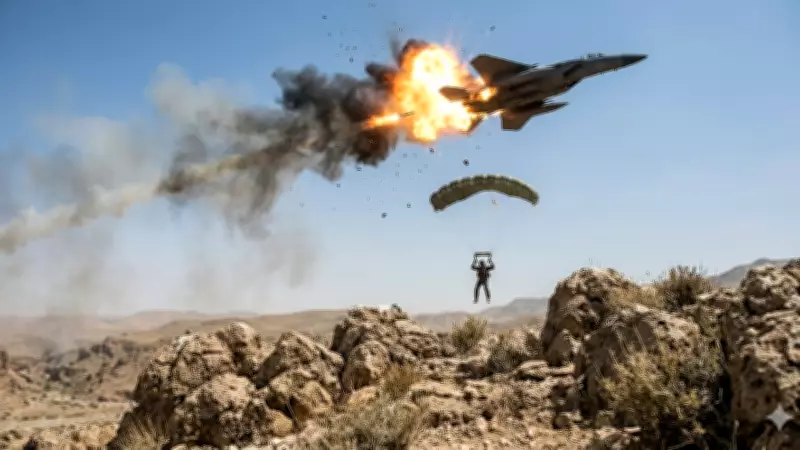
This operation formed part of a broader mission to retrieve one of two US airmen whose aircraft was shot down over Iranian territory during the ongoing regional conflict. The successful rescue marked a particularly rare instance of US aircraft losses inside Iran since hostilities escalated on February 28, making the operation both strategically and diplomatically sensitive.
'Ghost Murmur' Technology Pinpoints Airman's Location
In addition to the Pegasus deception campaign, the CIA reportedly deployed a highly classified system codenamed "Ghost Murmur" to detect the downed airman's heartbeat from a significant distance and precisely pinpoint his location within challenging mountainous terrain. This advanced technology, reportedly developed by Lockheed Martin's secretive Skunk Works division, is said to rely on sophisticated sensing methods that potentially involve quantum magnetometry to isolate faint biological signals from overwhelming environmental noise.
CIA Director John Ratcliffe hinted at such extraordinary capabilities during public remarks, stating that the agency had deployed "human assets and exquisite technologies that no other intelligence service in the world possesses." He dramatically compared the mission's difficulty to "hunting for a single grain of sand in the middle of a desert," emphasizing the technological superiority demonstrated during the operation.
Expert Skepticism and Presidential Endorsement
Despite these claims, numerous technical experts have expressed significant skepticism regarding the feasibility of detecting a human heartbeat from miles away, noting that such biological signals are extremely weak even at close proximity. The scientific community remains divided on whether current technology could achieve such detection ranges with practical reliability.
Nevertheless, former US President Donald Trump appeared to endorse the existence of advanced, undisclosed technologies during an interview with The New York Post, stating emphatically, "Nobody even knows what it is… we have equipment the likes of which nobody has ever even thought about." This statement aligns with the administration's pattern of highlighting technological superiority in national security matters.
Massive Rescue Operation with International Support
The comprehensive rescue operation reportedly involved more than 150 aircraft and hundreds of special forces personnel working in coordination across multiple agencies. Israeli intelligence support also played a significant role in assessing conditions on the ground and providing regional expertise, highlighting the international cooperation that characterized this sensitive mission.

This revelation about Pegasus deployment represents a significant expansion in understanding how intelligence agencies are repurposing surveillance technologies for active deception campaigns rather than passive intelligence gathering alone. The operation demonstrates how modern espionage increasingly blends cyber capabilities with traditional special operations in complex geopolitical environments.





