Cesar Chavez Legacy Shattered as Sexual Abuse Allegations Surface After 60 Years
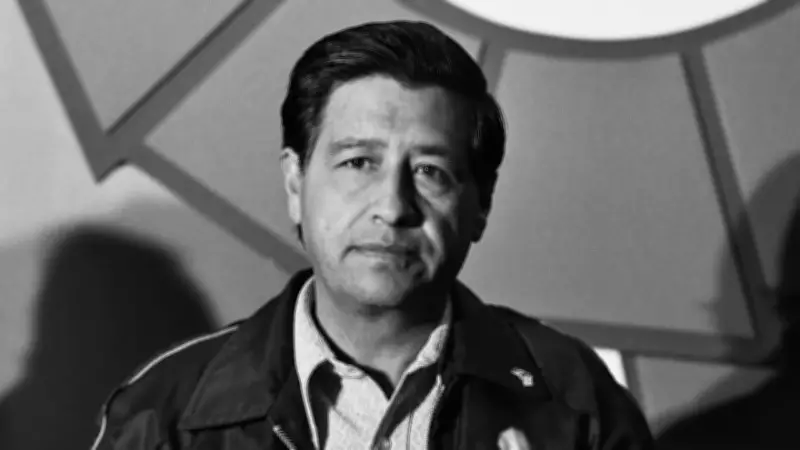
For decades, Cesar Chavez held a near-sacred position in the American consciousness. As the brown-skinned son of migrant labourers, he rose through immense moral courage to become the most influential labour leader in United States history. Streets were named after him, schools were built in his honour, and presidents displayed his bust in the Oval Office, cementing his status as an untouchable hero. However, in March 2026, this pedestal began to crumble when the women who had silently served alongside him for sixty years finally spoke out, revealing a dark and hidden truth.
From Migrant Fields to Civil Rights Icon: The Rise of Cesar Chavez
To grasp the magnitude of the allegations, one must first understand who Cesar Chavez was and his profound impact. Born in Yuma, Arizona, in 1927, Chavez grew up in a Mexican American family that traversed California's sun-scorched valleys, picking crops like lettuce, grapes, and cotton for meagre wages. This childhood of hardship and dignity shaped his lifelong mission. In 1962, alongside labour activist Dolores Huerta, he co-founded the National Farm Workers Association, later evolving into the United Farm Workers of America, sparking a movement that reshaped American labour history.
Chavez led hunger strikes that captured national attention, organised grape boycotts that resonated in households across the country, and negotiated contracts that secured better wages and humane conditions for hundreds of thousands of previously invisible labourers. Through marches, fasts, and public prayers, he became known as the Latino Martin Luther King Jr., a moral beacon for a marginalised community. California honoured him with a state holiday, President Barack Obama proclaimed March 31 as Cesar Chavez Day, and President Joe Biden placed a bronze bust of him in the Oval Office. Upon his death in 1993 at age 66, he was mourned as a saint.

The Fall: Sixty Years of Silence Broken
The fall, when it arrived, was absolute. Dolores Huerta, the labour legend and civil rights icon without whom the UFW might never have existed, broke the silence in March 2026. In a statement, she revealed she had been sexually abused by Chavez while they co-led the movement together, when she was in her thirties. Huerta described two encounters: one involving manipulation and pressure, and another where she was forced against her will. Both resulted in pregnancies, which she kept secret, arranging for the children to be raised by other families. For sixty years, she carried this burden alone, fearing that speaking out would harm the movement she dedicated her life to.
"I did not know he had hurt other women," she said. But a report by The New York Times revealed that Chavez had systematically groomed and sexually abused young girls within the farmworker movement, shattering the parallel between his public image as a protector and his private actions as an exploiter.
A Community in Mourning: "Like a Monster"
The Latino community responded with immediate and visceral grief. Mary Rose Wilcox, a former Phoenix City Council member who had marched with Chavez, removed his photographs from her family's restaurant and planned to cover a mural in his likeness. She expressed the collective pain, stating, "We love Cesar Chavez. But we cannot honour him and we cannot even love him anymore. There's two things. Chavez the man, and Chavez the man we didn't know. The one we did not know is like a monster." This sentiment captured the agonising realisation that the hero and the monster were one and the same.
The Reckoning Begins: Institutional Consequences
Institutional repercussions followed swiftly. The California Museum announced it would remove Chavez from the state's Hall of Fame, an unprecedented move. Celebrations for his birthday on March 31 were cancelled across California, Texas, and Arizona, with the Cesar Chavez Foundation itself requesting this. Leaders from both political parties called for renaming streets, schools, and public buildings bearing his name. Some Democratic leaders in Texas even proposed replacing Chavez's name with Huerta's as a gesture of justice and symbolism.

California Governor Gavin Newsom said he was still "processing" the revelations, while former presidents Obama and Biden had not commented. The bronze bust in the Oval Office remained, its future uncertain.
Contradictions and Legacy: A Fractured History
For those familiar with Chavez's life, the allegations were devastating but not entirely surprising. Miriam Pawel, a biographer, noted that Chavez was always a figure of deep contradictions, with abusive dynamics within the union overlooked for years to protect the cause. This reflects a common, corrosive bargain in social movements where private sins are ignored for public good.
Chavez's family issued a statement expressing devastation and supporting the survivors, while the United Farm Workers union distanced itself from its founder's celebrations, affirming its mission. Latino leaders emphasised that the farmworker movement transcends any individual, rooted in the struggle for fair wages and dignity that predates and will outlast Chavez.
For the victims, including Huerta and the young girls groomed in the movement's shadow, the reckoning is intimate and agonising, marking only the beginning of a painful journey toward healing and justice.