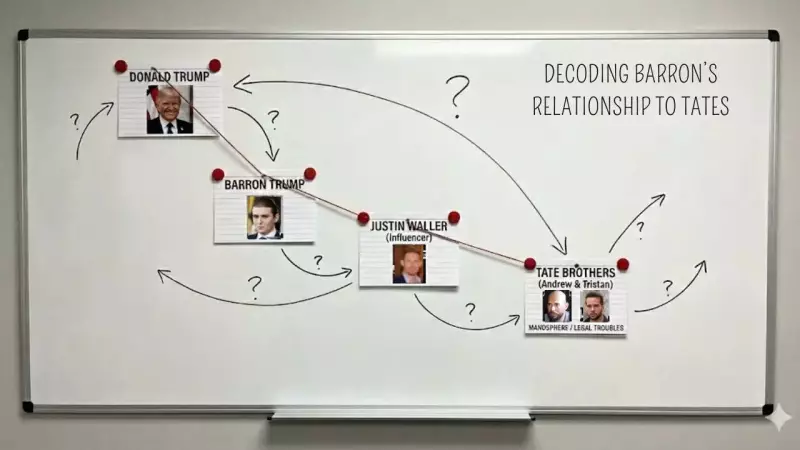
The recent brief public sighting of Barron Trump at Mar-a-Lago turned into a major story, not because of the sighting itself, but due to revelations that emerged just days before. Reports in the US media indicated that the 19-year-old son of former President Donald Trump had privately associated with figures connected to the online "manosphere," including a close confidant of the controversial internet personality Andrew Tate.
The Trigger: Justin Waller's Claims
This episode, which has dragged Barron Trump into an uncomfortable public discussion about digital subcultures and political influence, was triggered by specific reporting. The focus landed on Barron following claims that he had been in contact with Justin Waller, a Texas-based influencer who presents himself as a close ally of Andrew and Tristan Tate. Waller has even described himself as a "third brother" to the Tate siblings, signaling deep loyalty.
According to Waller's own accounts, he has socialized with Barron and spoken to him regularly. These conversations reportedly included personal topics like dating and managing life in the public eye. The claims, which spread rapidly online, shifted the narrative from mere curiosity to full-blown controversy, largely because of the notorious reputation of the people Waller is linked to.

Who is Andrew Tate and Why Does It Matter?
Andrew Tate is a central figure in the online manosphere, a network of influencers promoting a hyper-masculine worldview to young men. His content mixes motivational speaking with aggressive rhetoric concerning women, power, and social hierarchy. His massive reach, primarily through short-form video platforms, was later curtailed by bans and restrictions.
Beyond his cultural notoriety, Tate's profile is defined by serious legal issues. He and his brother, Tristan Tate, are facing criminal cases in Romania. They are accused of rape, human trafficking, and organised exploitation of women. Both brothers deny all allegations, framing the investigations as politically motivated. These cases are still ongoing.
Barron Trump's Reported Role and the 'Escape from Romania' Narrative
It is crucial to note that Barron Trump has not been accused of any crime, and there is no evidence he has publicly endorsed Andrew Tate's views. He has maintained a largely private life. The reporting suggests a narrower, more ambiguous connection: private contact with Justin Waller and possible discussions about the Tate brothers' legal troubles, including perceptions that their prosecution is unjust.
These accounts rely heavily on Waller's statements and lack independent verification. There is no public record of Barron meeting Andrew Tate in person or intervening legally on his behalf.
The controversy gained extra fuel from a narrative promoted by Tate and his supporters. After months of travel restrictions, the Tate brothers were granted greater freedom of movement in Romania. They framed this as a vindication, hinting that international pressure and connections in US conservative circles played a role. While there is no evidence any Trump family member intervened, this perception of influence is powerful within Tate's online ecosystem, where the idea that access can alter legal realities is part of his mythology.
The Bigger Picture: Manosphere Meets Mainstream Politics
This story persists because it sits at the intersection of several modern anxieties: the reach of toxic online cultures, the symbolic weight of the Trump name, and the spectacle of a private young adult becoming a proxy for larger debates.
It also reflects a significant shift in politics. Online subcultures like the manosphere, once on the fringes, now directly influence electoral politics. Campaigns, including Donald Trump's 2024 run, actively court influencers popular with young men on platforms like podcasts. Interestingly, there were background suggestions within campaign circles that Barron Trump had encouraged his father's shift toward these long-form digital platforms, understanding where young male attention had migrated.

This context makes Barron's reported engagement with internet influencers seem less like casual teenage curiosity and more like familiarity with online power networks. The manosphere's leading figures increasingly brush against political power through interviews and informal access, blurring the lines between internet culture and political families.
Ultimately, the known facts are limited. There is no evidence Barron Trump shares Tate's views, has met him, or used family influence for him. The narrative heavily depends on claims from an influencer with a motive to boost his own relevance. Yet, the story endures as a potent lens for debating masculinity, media power, and digital influence in today's political landscape.