

NASA's Artemis II Crew Safely Returns to Earth After Groundbreaking Lunar Mission
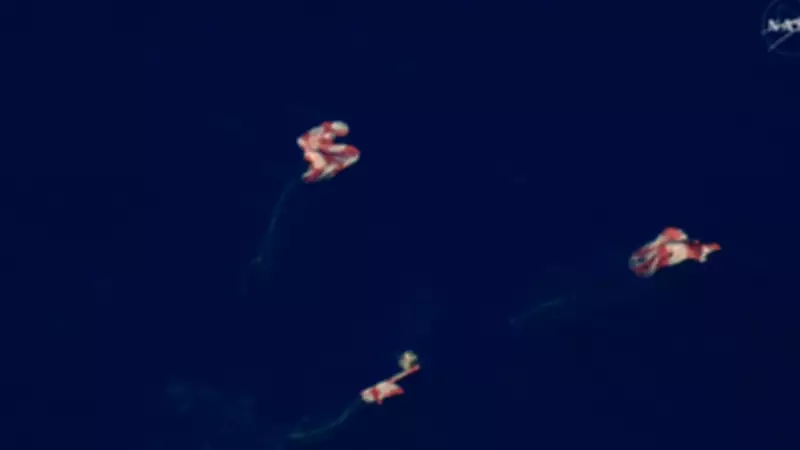
NASA's Artemis II crew successfully splashed down in the Pacific Ocean near San Diego, California, early Saturday, marking their triumphant return to Earth after a historic lunar flyby mission. The Orion spacecraft, carrying the four astronauts, completed a flawless splashdown, with a joint NASA and U.S. military recovery team on site to provide immediate medical support and assistance.
Mission Overview and Key Achievements
Following liftoff on April 1, the 10-day mission sent the astronauts on a flyby around the Moon, rigorously testing life-support, navigation, and propulsion systems in deep space without landing. This mission serves as a critical precursor to a potential crewed Moon landing targeted for 2028, advancing NASA's long-term goals for lunar exploration.
Record-Breaking Distance: The Artemis II mission set a new milestone by achieving the farthest distance humans have ever traveled from Earth, reaching 406,771 kilometers on the far side of the Moon. This surpasses the previous record of 400,171 kilometers established by Apollo 13 in 1970, highlighting significant progress in space exploration capabilities.

Crew Experience and Technical Details
The crew, consisting of Commander Reid Wiseman, pilot Victor Glover, mission specialist Christina Koch, and Canada's Jeremy Hansen, reentered Earth's atmosphere at speeds of up to Mach 33—33 times the speed of sound. This marked a return to the high velocities last seen during NASA's Apollo missions of the 1960s and 1970s, demonstrating advanced reentry technologies.
During the lunar flyby, the astronauts spent several hours capturing stunning images and describing the breathtaking views as they orbited the Moon before initiating their journey back to Earth. The Orion capsule, named Integrity, operated in a fully autonomous mode, with the crew only prepared to take manual control in emergency situations, showcasing the reliability of modern spacecraft systems.
Recovery Operations and Historical Context
The recovery ship USS John P Murtha was strategically positioned off the coast of San Diego to receive the crew, supported by military aircraft and helicopters for a seamless operation. Lead flight director Jeff Radigan noted that despite the advanced planning, there was an expected degree of "irrational fear that is human nature," particularly during the six-minute communication blackout before parachute deployment.
This event marks the first joint reentry operation by NASA and the U.S. Defense Department for a lunar crew since Apollo 17 in 1972, underscoring the collaborative efforts in advancing human spaceflight. The successful splashdown not only validates the Artemis program's objectives but also paves the way for future missions aimed at establishing a sustainable human presence on the Moon and beyond.






