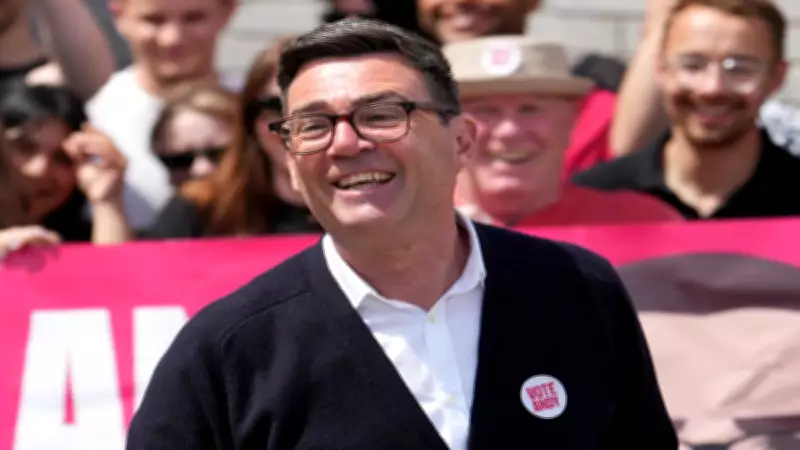
Andy Burnham, the Mayor of Greater Manchester, has emerged as the frontrunner to replace Sir Keir Starmer as the next British Prime Minister, according to recent political analysis and opinion polls. The Labour Party figure, known for his strong regional leadership and progressive policies, is gaining traction amid speculation about Starmer's future following a series of electoral setbacks and internal party divisions.
Who is Andy Burnham?
Andy Burnham, 55, has served as the Mayor of Greater Manchester since 2017. He previously held several senior cabinet positions under Prime Ministers Tony Blair and Gordon Brown, including Secretary of State for Health, Secretary of State for Culture, Media and Sport, and Chief Secretary to the Treasury. Burnham was also a key figure in the 2010 Labour leadership election, finishing fourth. He is widely recognized for his advocacy for public services, particularly the National Health Service (NHS), and his handling of the COVID-19 pandemic in Greater Manchester, where he often clashed with the central government over funding and restrictions.
Why Burnham is Leading the Race
According to a recent YouGov poll conducted in June 2026, Burnham leads the list of potential successors to Starmer, with 28% of Labour members naming him as their preferred candidate. This places him ahead of other contenders such as Shadow Chancellor Rachel Reeves (18%), Deputy Leader Angela Rayner (15%), and Shadow Health Secretary Wes Streeting (12%). Political analysts attribute Burnham's popularity to his strong regional base, his ability to connect with traditional Labour voters, and his consistent messaging on issues like housing, transport, and devolution.

"Andy Burnham represents a return to Labour's core values while also appealing to the modern electorate," said Professor Jane Green, a politics expert at the University of Oxford. "His track record in Manchester shows he can deliver tangible results, which is what the party needs after recent electoral disappointments."
Starmer's Challenges and the Leadership Context
Sir Keir Starmer has faced mounting pressure following Labour's loss in the 2024 general election and poor results in the 2025 local elections, where the party lost control of several key councils. Internal divisions over policy direction, particularly on Brexit and economic strategy, have further weakened his position. A recent internal Labour Party review indicated that the party's support among working-class voters has declined by 8% since 2023, fueling calls for a leadership change.
Burnham has not officially declared his candidacy, but sources close to him suggest he is "considering his options." In a recent interview with the BBC, Burnham said, "The Labour Party needs to be a government-in-waiting, not a party of perpetual opposition. We need a clear vision for the future that resonates with people across the country."
Potential Impact of a Burnham Premiership
If elected Labour leader and subsequently Prime Minister, Burnham is expected to pursue a platform centered on regional devolution, increased public investment, and stronger social safety nets. He has been a vocal advocate for the "levelling up" agenda, which aims to reduce regional inequalities. His experience in health policy could also signal a renewed focus on the NHS, which remains a top priority for voters.
However, Burnham faces challenges, including skepticism from the party's more left-wing factions and the need to unify a divided party. The next general election is scheduled for 2029, but early leadership change could alter the political landscape significantly.
"Andy Burnham has the credibility and experience to take on the Conservatives," said political commentator Tim Bale. "But he must navigate internal party dynamics and present a compelling alternative to the current government."