André Béteille's Enduring Legacy in Indian Sociology
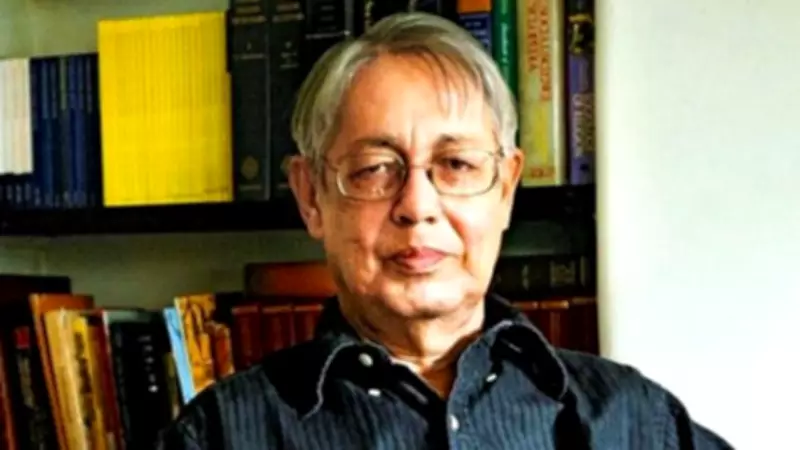
The intellectual contributions of sociologist André Béteille continue to resonate powerfully in academic and social discourse, decades after his foundational work. His scholarship represented a significant departure from traditional perspectives that viewed caste as the exclusive or primary framework for understanding Indian society.
Breaking Away from Caste-Centric Analysis
Béteille's most enduring contribution was his insistence on moving beyond what he saw as an overemphasis on the caste system as the sole determinant of social structure in India. While acknowledging caste's undeniable importance in historical and contemporary contexts, he argued compellingly that this singular focus obscured other crucial dimensions of social organization.
His work highlighted how economic transformations and political developments were creating new social alignments that often cut across traditional caste boundaries. This perspective was particularly relevant as India underwent significant industrialization, urbanization, and political democratization throughout the latter half of the 20th century.

Emphasizing Economic and Political Forces
Béteille's scholarship meticulously documented how economic class and political power were emerging as increasingly important factors in social stratification. He observed that in urban settings particularly, occupational differentiation and economic status were creating social hierarchies that didn't always correspond neatly with traditional caste categories.
His research demonstrated that political mobilization and democratic processes were creating new solidarities and conflicts that transcended caste identities. This was especially evident in the way political parties organized support and how government policies affected different segments of society.
Methodological Innovations and Lasting Impact
Beyond his theoretical contributions, Béteille was noted for his methodological rigor and empirical approach to sociological research. His fieldwork in rural and urban settings provided rich data that supported his arguments about the changing nature of Indian society.
The enduring relevance of Béteille's work lies in several key areas:
- Providing a more nuanced understanding of social stratification in modern India
- Highlighting the interaction between traditional institutions and modern forces
- Influencing generations of sociologists and social scientists in India and abroad
- Offering frameworks that remain valuable for analyzing contemporary social changes
Contemporary Relevance
Today, as India continues to experience rapid economic growth, technological transformation, and political evolution, Béteille's insights about the complex interplay between caste, class, and power remain remarkably pertinent. His work encourages scholars and policymakers to consider multiple dimensions of social inequality and mobility rather than relying on simplistic categorizations.
Béteille's legacy endures not only in academic circles but also in how we understand the ongoing transformation of Indian society. His balanced perspective—acknowledging the persistence of caste while recognizing the growing importance of other social forces—provides a sophisticated framework for analyzing India's complex social landscape.