American Conservative Entrepreneur Andrew Torba Condemns H-1B Visa Holders in US AI Research
Andrew Torba, an American businessman and self-described Christian conservative, has launched a sharp critique against the participation of H-1B visa holders and other foreign workers in artificial intelligence research within the United States. He has labeled this practice as a "massive national security issue", arguing that it poses significant risks to the country's technological sovereignty and security infrastructure.
Torba's Comments Align with MAGA and 'America First' Sentiments
Torba's remarks resonate strongly with MAGA supporters and the broader 'America First' movement, which has been advocating for stricter immigration policies and a complete ban on H-1B visas. This faction is particularly focused on reclaiming jobs that they believe have been "stolen" by foreign nationals from native US citizens, emphasizing economic protectionism and nationalistic employment strategies.
In a post on the social media platform X, Torba expressed his concerns vividly, writing: "Allowing H1Bs and other foreigners to work inside American AI labs is insane. Massive national security issue. No one is talking about this. You may as well let them work on our nuclear bombs if you're allowing that." This statement underscores his view that AI research is as critical to national security as nuclear defense, highlighting the perceived dangers of foreign involvement.

Understanding the H-1B Visa Program and Its Role in AI
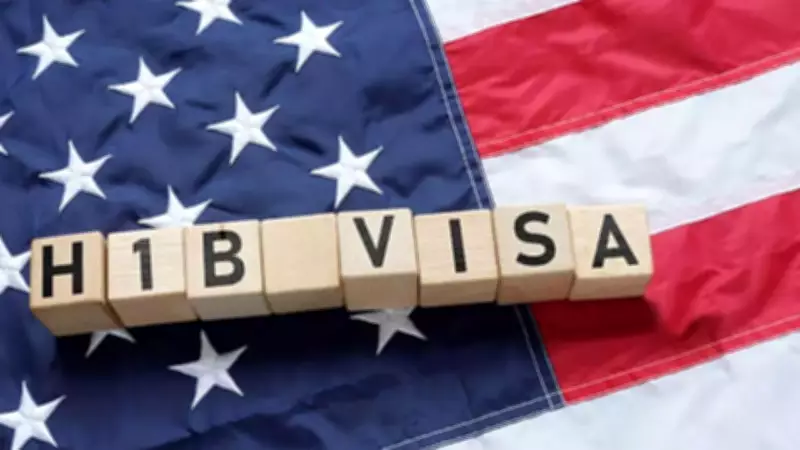
The H-1B visa program is legally designed to allow highly skilled professionals to work in the United States in specialty occupations that typically require at least a bachelor's degree. This includes fields such as:
- Computer science
- Software engineering
- Machine learning
- AI research
Under this program, H-1B visa holders can be employed in AI labs at research institutions, universities, startups, or major tech companies, provided their US employer files the appropriate petition with authorities. The majority of these visas are utilized by workers from India and China, who play crucial roles in sectors like technology and defense.
Current Trends and Challenges in H-1B Employment
Many AI companies in the US already rely on H-1B workers, often offering competitive salaries to attract top talent in machine learning and AI development. However, critics, including some Republicans, argue that foreign workers are sometimes exploited as "cheap labour", though recent policy changes aim to prioritize higher-paid and more specialized roles to focus the program on advanced skilled jobs, including AI research and development.
Recent adjustments to H-1B rules, such as the $100,000 fees implemented under the Trump administration last year, have made it more challenging for applicants. Additionally, H-1B workers must remain with the employer and in the role specified in their visa petition, with any changes requiring new filings or amendments.
Statistical Overview of H-1B Visa Holders in the US
As of late 2025, data from the United States Citizenship and Immigration Services (USCIS) indicates that approximately 440,000 H-1B visa holders are employed in the United States. Key points include:
- They are primarily concentrated in technology, engineering, healthcare, and research sectors.
- This group represents less than 0.5% of the total US workforce.
- In fiscal year 2024, around 400,000 H-1B approvals were granted, including new hires and renewals, against an annual cap of 85,000 visas.
Background on Andrew Torba and His Platform
Andrew Torba is an American entrepreneur best known as the founder and CEO of Gab, a social media platform launched in 2016 as an alternative to mainstream sites. Gab has gained notoriety for attracting far-right users, and Torba has authored several books on Christian nationalism, further cementing his role as a vocal figure in conservative circles.
This controversy highlights ongoing debates about immigration, national security, and the global competition for AI talent, with implications for US policy and international relations.