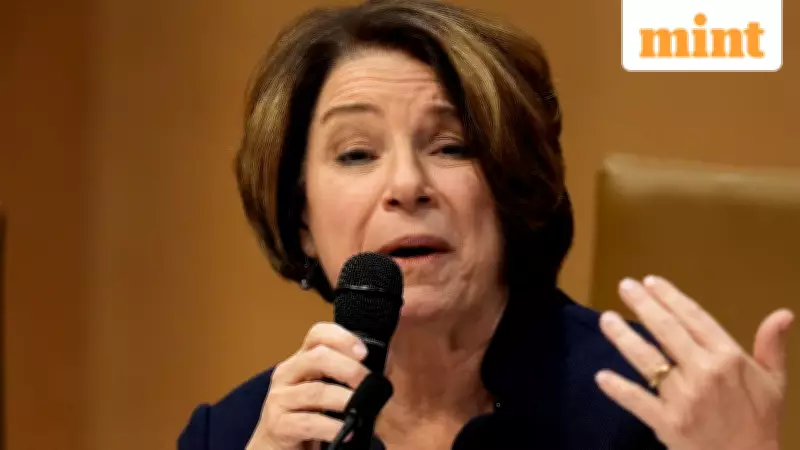
US Senator Amy Klobuchar Enters Minnesota Governor Race, Setting Up High-Profile Contest
In a significant political development, Amy Klobuchar, a long-serving United States senator and one of the Democratic Party's most recognizable leaders, has officially entered the race for governor of Minnesota. This announcement sets up a high-profile contest in a state currently grappling with substantial political, social, and law-and-order challenges.
A Familiar Face in Minnesota Politics
Klobuchar, aged 65, is running with a clear mission to stand up to former President Donald Trump and push back against his administration's immigration crackdown policies. Her entry into the gubernatorial race provides Democrats with a proven statewide winner as they strive to retain the governor's office following Governor Tim Walz's decision to withdraw from seeking a third term.
As Minnesota's senior US senator, a position she has held since 2007, Klobuchar brings extensive political experience to the table. She is a prominent member of the Democratic–Farmer–Labor Party (DFL) and is widely recognized for her pragmatic, centrist approach and remarkable ability to secure votes across urban, suburban, and rural areas of Minnesota.

Klobuchar made history as Minnesota's first elected female US senator and has consistently won every statewide race she has entered by comfortable margins. Notably, in her 2024 re-election campaign, she significantly outperformed Democratic presidential nominee Kamala Harris across the state, demonstrating her strong local appeal.
From Prosecutor to Senator: A Law-and-Order Background
Before ascending to national politics, Klobuchar built a substantial career as a local prosecutor, which now forms a crucial part of her gubernatorial pitch. She served as Hennepin County attorney from 1999 to 2007, managing one of the largest prosecutor's offices in the Midwest during her tenure.
During this period, she established a reputation for being tough on crime while simultaneously advocating for victim protection and public safety reforms. This law-and-order background has become central to her campaign message as Minnesota engages in ongoing debates about crime, policing, and federal immigration enforcement policies.
A Vocal Critic of Donald Trump
Klobuchar gained substantial national attention during Donald Trump's first presidency, particularly for her sharp questioning of judicial nominees and her significant role in congressional investigations following the January 6, 2021 Capitol attack. As chair of the Senate Rules Committee, she helped lead critical inquiries into security failures at the Capitol and pushed for important reforms to election laws and democratic safeguards.
She has consistently ranked among the most vocal Democratic critics of Trump, especially on crucial issues such as immigration, civil liberties, and federal law-enforcement tactics. These very issues have now become central to the Minnesota governor's race, positioning Klobuchar's experience and stance as particularly relevant to current state concerns.
2020 Presidential Run and National Recognition
Klobuchar previously ran for the Democratic presidential nomination in 2020, presenting herself as a Midwestern moderate with broad appeal across different voter demographics. She performed strongly in early contests in Iowa and New Hampshire before eventually dropping out and endorsing Joe Biden.
Though she did not secure the nomination, her presidential campaign significantly boosted her national standing and visibility. She was considered for a Cabinet role and briefly vetted as a possible vice-presidential pick, further cementing her position as a significant figure within the Democratic Party.
The Minnesota Race Ahead: A Competitive Political Landscape
Republicans have already lined up several candidates for the gubernatorial race, including MyPillow founder Mike Lindell, former state senator Scott Jensen, and senior state lawmakers. Key issues expected to dominate the campaign include immigration policies, crime rates, federal power dynamics, and alleged fraud in state programs.

If elected, Klobuchar would leave the Senate after nearly two decades of service to lead the state she has represented throughout her political career. This potential transition marks a significant moment in Minnesota's political history and could reshape the state's governance approach for years to come.
The upcoming gubernatorial contest promises to be one of the most closely watched political battles in the United States, with implications that extend far beyond Minnesota's borders. Klobuchar's entry has already intensified the political landscape, setting the stage for a vigorous debate about the state's future direction amid ongoing national political tensions.