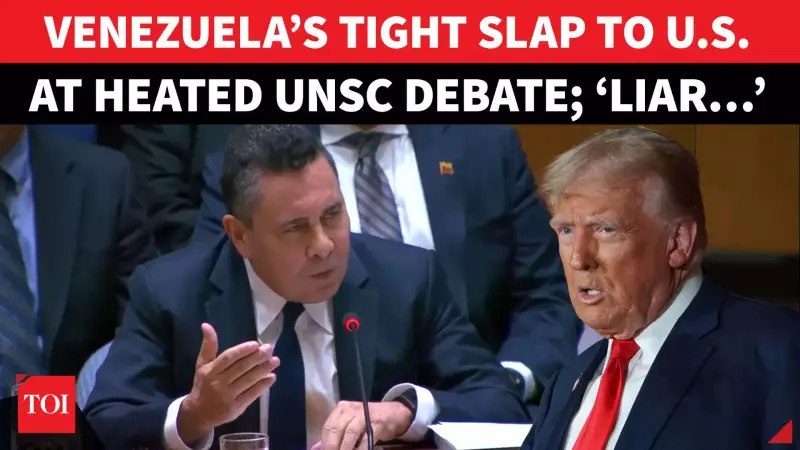
In an explosive emergency session of the United Nations Security Council, Venezuela's top diplomat launched a scathing attack on the United States, accusing it of orchestrating the kidnapping of President Nicolás Maduro and First Lady Cilia Flores. The dramatic meeting, held on January 6, 2026, saw tensions soar as global powers clashed over the legality of the American military action.
‘An Illegitimate Armed Attack’: Venezuela’s Fiery Accusations
Venezuela’s Ambassador to the UN, Samuel Reinaldo Moncada Acosta, did not mince words. He condemned the US operation as a blatant violation of the UN Charter and an act of aggression. Moncada stated that the military strikes, which led to the capture of the Venezuelan leader, were not only illegitimate but also resulted in civilian and military casualties and significant damage to critical national infrastructure.
“They have kidnapped our president!” the envoy declared, framing the incident as a dangerous escalation by a “bully” nation, in a clear reference to former US President Donald Trump. The emotional address painted the event as a flagrant breach of international sovereignty and law.

Global Powers Choose Sides: Condemnation vs. Justification
The US defence of its actions stood in stark contrast to the outcry from several Security Council members. Washington described the mission as a “surgical law enforcement operation,” suggesting it was a targeted action based on specific legal grounds. However, this justification failed to convince many nations in the chamber.
Russia and China led the charge in condemning the American move. They warned that such unilateral military actions pose a severe threat to the foundations of international law and could destabilise global security. Colombia, a regional neighbour, also joined the critics, highlighting the broader regional concerns about foreign intervention in the Americas.
Broader Implications for International Order
The emergency meeting underscores a deepening rift in the international community regarding the principles of state sovereignty and the right to intervene. The forceful capture of a sitting head of state by another country sets a contentious precedent that experts fear could lead to more unilateral actions worldwide.
The strong reactions from major powers like Russia and China indicate that this event is likely to fuel existing geopolitical tensions. The situation leaves the UN Security Council deeply divided, raising questions about its ability to maintain global peace and uphold its charter when permanent members are directly involved in the conflict.
As the world watches, the fate of President Maduro and the political future of Venezuela hang in the balance, with the incident marking one of the most direct confrontations in recent hemispheric history.