

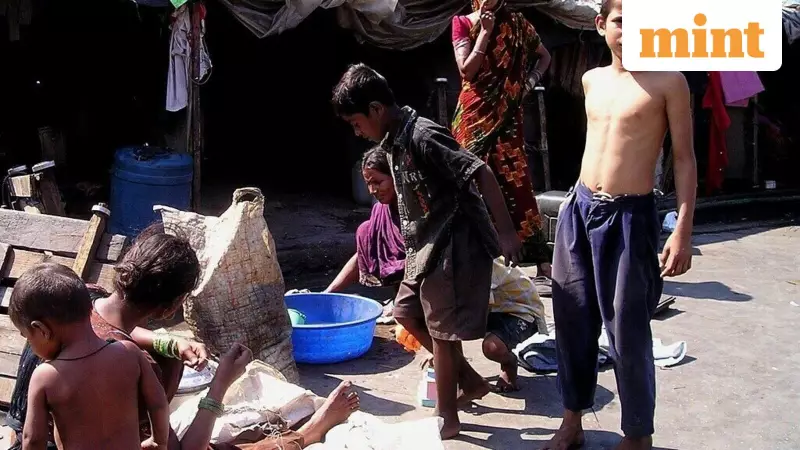
A new report from UNICEF reveals a complex picture of child welfare worldwide. While severe child deprivation has seen a significant decline over the past two decades, millions of children, including a staggering number in India, continue to face severe hardships.
A Tale of Progress and Persistent Challenges
According to The State of the World's Children 2025 report released on Thursday, severe child deprivation has fallen by one-third since the year 2000. This marks a notable achievement in global development efforts. The UN children's agency confirmed that in low- and middle-income nations, poverty measured by severe deprivation in at least one critical area has been reduced by a third this century.
However, this progress is shadowed by stark reality. The report states that approximately two in five children across the globe still endure severe deprivation. For India, the numbers are particularly sobering. As many as 206 million children in the country experience at least one form of deprivation. On a slightly more positive note, fewer than one-third of that figure, or 62 million Indian children, suffer from two or more overlapping deprivations.

Understanding Deprivation and Global Poverty
UNICEF defines child deprivation as the absence of essential resources required for a child to survive, develop, and thrive. This encompasses critical shortfalls in areas like nutrition, access to clean water, sanitation facilities, healthcare services, education, and adequate housing.
The report further highlights that monetary poverty remains a crushing burden for many. Nearly 412 million children globally, which translates to one in every five, live in extreme monetary poverty, surviving on less than $3 per day. The weight of this crisis is felt most acutely in the regions of sub-Saharan Africa and South Asia.
Threats to Future Gains and Recommended Actions
UNICEF identified five key policy strategies that have successfully helped nations reduce child poverty: making it a national priority, protecting child-related spending, expanding social protection like cash transfers, strengthening access to quality public services, and promoting decent work for caregivers.
Despite these proven methods, the report issues a strong caution. Hard-won gains are under immediate threat from converging crises. Climate change, rising armed conflicts, and severe funding pressures create an escalating risk to children's well-being.
The climate crisis alone poses a monumental challenge. Each year, four out of five children confront at least one extreme climate hazard, such as a heatwave, flood, or drought. In 2023, nearly 9 million children were displaced by such disasters. Projections for 2050 are even more alarming, indicating that about eight times more children will be exposed to extreme heatwaves.
For conflict settings, UNICEF recommends prioritizing humanitarian access, education continuity, and rapid restoration of basic services. The agency also calls for innovative financial solutions, suggesting that traditional approaches like debt cancellation or increased aid have fallen short. Instead, debt restructuring is needed to create opportunities for governments to make robust, sustainable investments in children. The key, the report concludes, is aligning global incentives around reducing child poverty and enhancing children's well-being.






