

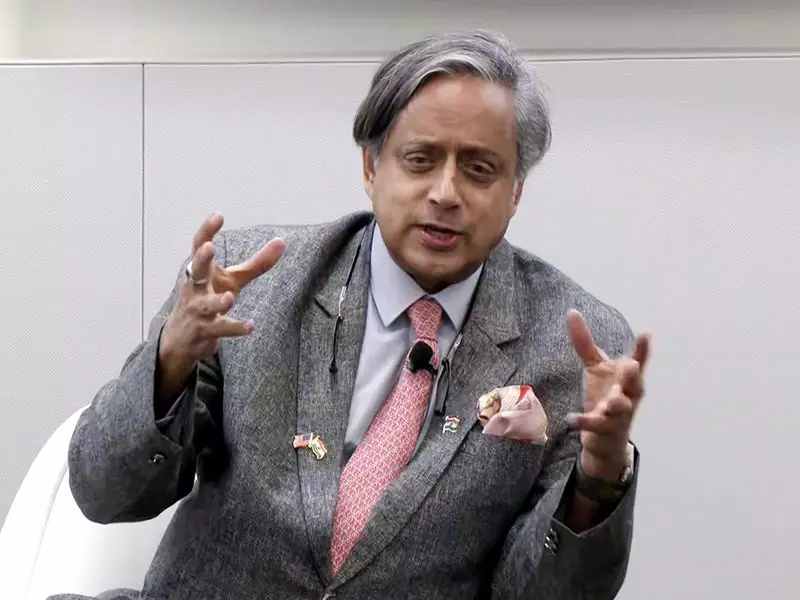
Congress MP and former UN diplomat Shashi Tharoor delivered a compelling defense of the United Nations during the prestigious Desmond Tutu Peace Lecture, arguing that the global body remains indispensable despite its visible failures in addressing the Gaza conflict and Ukraine war.
A Strong Defense in Troubled Times
Speaking at the University of the Western Cape in South Africa on Tuesday, Tharoor acknowledged the deep frustrations many feel about the UN's inability to prevent or resolve major conflicts. The veteran diplomat and author emphasized that the organization's shortcomings in Gaza and Ukraine have led to widespread criticism and doubts about its effectiveness.
"There is no question that the United Nations has let us down in Gaza, it has let us down in Ukraine," Tharoor stated frankly during his address. Despite these high-profile failures, he maintained that abandoning the world's primary international organization would be a grave mistake with far-reaching consequences.

The Indispensable Platform for Global Dialogue
Tharoor, who served as a UN official for nearly three decades before entering Indian politics, argued that the United Nations provides an essential platform that no alternative organization can replace. He highlighted that the UN offers the only universal forum where all 193 member states, regardless of size or power, can engage in diplomatic dialogue.
"Where else would we have all 193 countries in one room?" Tharoor questioned his audience. He pointed out that while regional organizations like BRICS exist, they cannot match the UN's comprehensive membership and global legitimacy.
The Indian parliamentarian drew attention to the UN's often overlooked successes, particularly its extensive humanitarian work. He noted that UN agencies provide food to 130 million people worldwide and vaccinate nearly half of the world's children, saving approximately three million lives annually.
The Path Forward: Reform and Renewal
While defending the UN's continued relevance, Tharoor did not shy away from addressing the need for significant reforms. He acknowledged that the current structure, particularly the Security Council, reflects the power dynamics of 1945 rather than contemporary global realities.
Tharoor specifically criticized the permanent five members (P5) of the Security Council - the US, UK, France, Russia, and China - for wielding veto power that often paralyzes decisive action. This mechanism has repeatedly prevented the UN from taking meaningful steps in conflicts where P5 members have strategic interests.
The former UN under-secretary general proposed that reform should focus on making the organization more representative and effective. He suggested that expanding permanent Security Council membership to include countries like India, Brazil, Germany, Japan, and African nations would better reflect today's multipolar world.
Tharoor concluded his lecture with a powerful message about the importance of preserving and improving the UN system. He argued that in an increasingly interconnected world facing complex challenges from climate change to pandemics, the need for a universal forum for cooperation has never been greater.
The Desmond Tutu Peace Lecture, named after the late South African archbishop and Nobel Peace Prize laureate, provides a platform for prominent global thinkers to address pressing international issues. Tharoor's participation continues his long-standing engagement with international diplomacy and global governance debates.






