

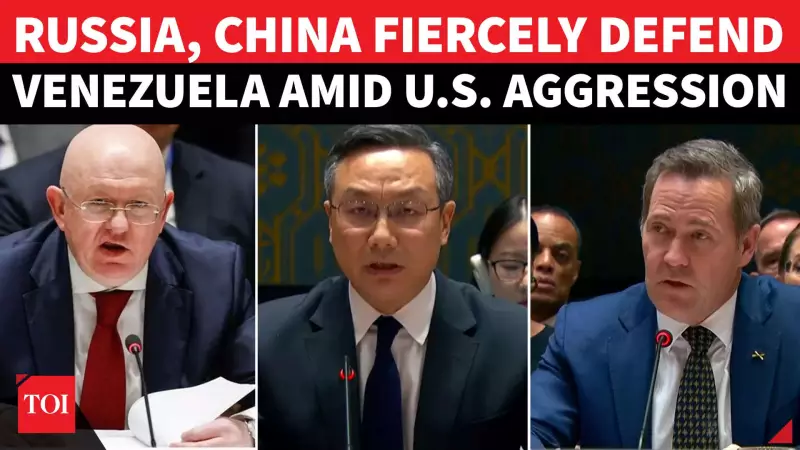
A sharp diplomatic confrontation erupted at the United Nations, with representatives from Russia and China launching a fierce critique against the United States for its escalating pressure on Venezuela. The session, held on December 24, 2025, ahead of a crucial vote, became a platform for airing fundamental disagreements on sovereignty, economic sanctions, and the use of military force.
The Core of the Confrontation
During the heated exchange, Russian and Chinese diplomats did not mince words. They characterised the recent U.S. actions against Venezuela as "aggression" and a clear violation of established international law. The debate centred on the Trump administration's strategy, which includes stringent economic sanctions and the deployment of naval assets, like the U.S. Navy's pursuit of oil tankers in the Caribbean. Venezuelan President Nicolas Maduro's government has branded former President Trump an "oil thief" in response to these measures.
Divergent Views on Sovereignty and Intervention
The UN meet highlighted the deep ideological rift between the major powers. The U.S. stance, advocating for increased pressure on the Maduro regime, was framed by Washington as a matter of regional security and democratic principles. Conversely, Moscow and Beijing presented it as an unacceptable case of external interference in the domestic affairs of a sovereign nation. This clash underscores the broader geopolitical tensions, with references also made to the Ukraine war and the strategic alignments between leaders like Putin and Xi Jinping.

Broader Implications and Regional Standoff
The verbal showdown at the UN is more than just rhetorical; it reflects the tangible standoff in the Caribbean. Incidents like the Bella-1 tanker slipping away from the U.S. Navy demonstrate the on-the-ground challenges of Washington's policy. Furthermore, the discussion touched upon wider military developments, such as the U.S. deployment of advanced warships with hypersonic missiles, indicating an environment of heightened military preparedness. The outcome of this diplomatic spat is likely to influence the upcoming UN vote and set the tone for future engagements in Latin America, with global powers firmly choosing sides.
The session concluded without resolution, leaving the international community to ponder the escalating tensions and the potential for further confrontation, both in diplomatic chambers and in international waters.






