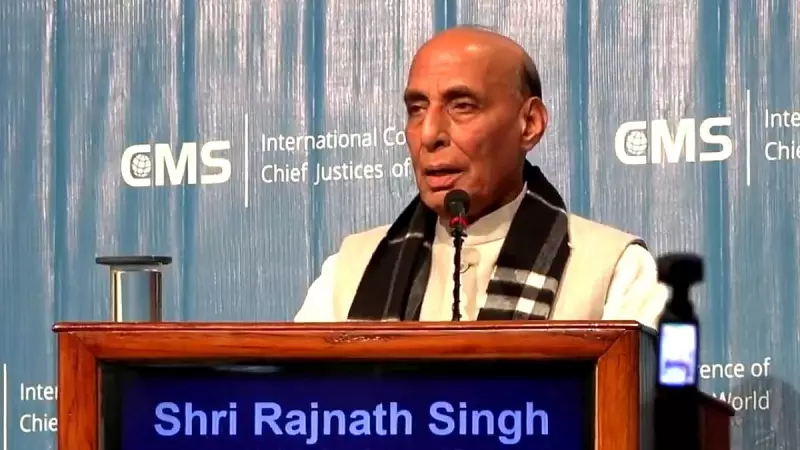
In a powerful address that resonated across international circles, Defence Minister Rajnath Singh has declared that today's rapidly changing world demands a fundamentally reformed United Nations. His statement comes at a critical juncture marked by escalating global conflicts and geopolitical tensions.
The Urgent Need for UN Transformation
Speaking on November 21, 2025, the senior Indian minister emphasized that the current international situation cannot improve without returning the United Nations to its founding principles. He articulated that the world body must rediscover its original mission focused on maintaining global peace, ensuring justice, and providing equal representation to all nations.
Rajnath Singh's remarks highlight India's growing frustration with the outdated structure of the United Nations, particularly the UN Security Council, which continues to reflect the power dynamics of the post-World War II era rather than contemporary geopolitical realities.

Core Objectives: Peace, Justice and Equal Representation
The Defence Minister specifically stressed that the United Nations must refocus on its core objectives as originally envisioned by its founders. 'This situation can change only when we bring the United Nations back to its core objectives — peace, justice, and equal representation', he stated unequivocally.
His comments underscore India's long-standing position that the UN requires comprehensive reforms to remain relevant and effective in addressing 21st-century challenges. The call for equal representation directly references India's legitimate claim for a permanent seat in the UN Security Council.
Global Context and Implications
Rajnath Singh's statement comes against the backdrop of multiple ongoing international conflicts that have exposed the limitations of current global governance mechanisms. The United Nations has faced criticism for its inability to prevent or effectively resolve several major disputes in recent years.
India's push for UN reform represents a significant development in international diplomacy. As one of the world's largest democracies and fastest-growing economies, India's perspective carries substantial weight in discussions about global governance restructuring.
The Defence Minister's intervention signals India's determination to play a more substantial role in shaping international institutions and norms. This aligns with the country's broader foreign policy objectives and its aspiration for multipolar world order where developing nations have greater voice in decision-making processes.
As global conflicts continue to challenge international peace and security, Rajnath Singh's call for a renewed United Nations could galvanize support among nations seeking more equitable global governance structures.