Brazilian Leader Launches Scathing Critique of Trump's Diplomatic Approach
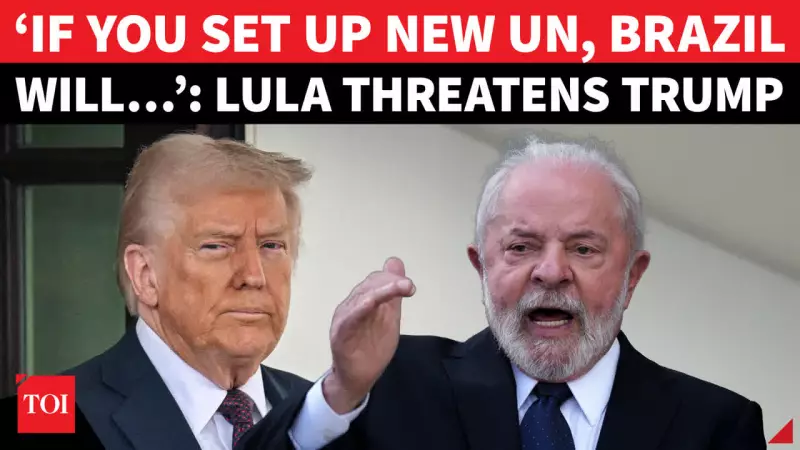
In a significant address delivered in Salvador, Brazilian President Luiz Inácio Lula da Silva has issued a forceful condemnation of U.S. President Donald Trump's foreign policy initiatives, particularly targeting a proposed Peace Council that Lula characterizes as an attempt to establish a "new United Nations" under Washington's dominance. The Brazilian president's remarks come amid escalating global tensions and reflect growing concerns about the erosion of established international frameworks.
Unilateralism Versus Multilateralism: A Fundamental Clash
President Lula articulated a stark warning about the shifting dynamics of global governance, asserting that unilateral actions are increasingly supplanting multilateral cooperation. He emphasized that this trend represents a dangerous departure from the principles enshrined in the UN Charter, which he claims is being systematically dismantled by what he termed the "law of the strongest." This critique directly challenges the Trump administration's approach to international relations, which has frequently prioritized bilateral agreements and national sovereignty over collective decision-making.
The proposed Peace Council, as outlined by U.S. officials, has become a focal point of Lula's criticism. He contends that this initiative would effectively create a parallel international body controlled by American interests, thereby marginalizing the existing United Nations structure and undermining its authority. This development, according to Lula, threatens to fragment the global order that has been painstakingly built since the Second World War.

Specific Condemnations and Broader Implications
Beyond the structural concerns about international institutions, President Lula specifically denounced recent U.S. military actions in Venezuela, labeling them as clear violations of national sovereignty. This condemnation aligns with Brazil's historical stance against foreign intervention in Latin American affairs and reflects broader regional anxieties about external powers influencing domestic politics.
Despite his sharp criticism of American policies, Lula carefully balanced his remarks by affirming Brazil's commitment to maintaining diplomatic relations with all major global powers. He explicitly rejected armed conflict as a solution to international disputes, instead advocating for renewed emphasis on diplomacy, transparency, and democratic values. This nuanced position underscores Brazil's attempt to navigate complex geopolitical waters while upholding its principles of non-intervention and peaceful resolution of conflicts.
The Context of Rising Global Tensions
Lula's speech occurs against a backdrop of increasing international friction, with multiple flashpoints emerging across different regions. His warning about unilateralism tearing apart the global order reflects anxieties shared by many nations about the potential breakdown of established norms and institutions. The Brazilian president's call for a return to multilateral diplomacy represents not just a critique of U.S. policy but a broader appeal for preserving the international system that has governed relations between states for decades.
The timing and location of this address in Salvador, a city with deep historical significance in Brazil's struggle for independence and sovereignty, adds symbolic weight to Lula's message. His words resonate with domestic audiences concerned about preserving Brazil's autonomy in foreign policy while simultaneously addressing an international community increasingly divided over the future direction of global governance.