A Warning from History: What the League of Nations Can Teach the UN in the Trump Era
At a time when US President Donald Trump's 'Board of Peace' threatens the future of the United Nations, the rise and fall of the League of Nations provides sobering lessons for global governance. Written by Nikita Mohta, this analysis delves into historical parallels that resonate strongly in today's geopolitical landscape.
Major Developments Highlighting International Rifts
Recent events have underscored a widening rift in international peacekeeping efforts. While UN Secretary-General António Guterres warned of powerful forces undermining global cooperation, President Trump invited world leaders to join a new 'Board of Peace'—an organization he would chair for life, aimed at peace-building. These developments cast significant doubt on the UN's future, especially as US withdrawals from key agencies and climate commitments, along with proposed funding cuts, could further weaken the international aid system amidst longstanding financial constraints.
The Birth and Aims of the League of Nations
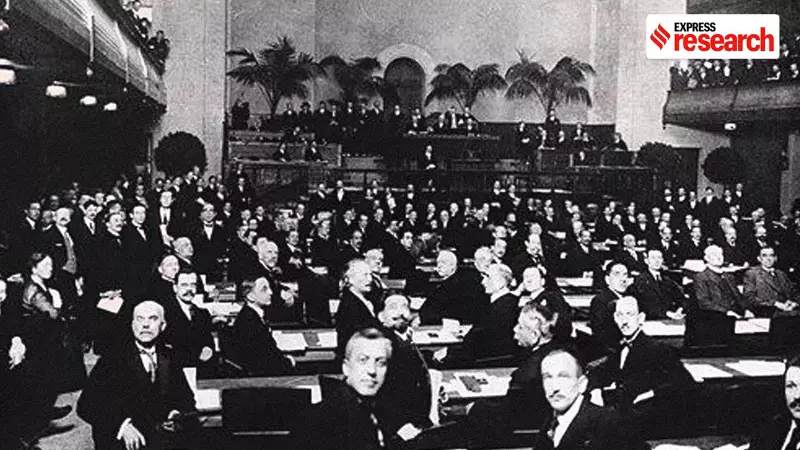
The League of Nations formally came into existence on January 10, 1920, coinciding with the Treaty of Versailles. Headquartered in Geneva, Switzerland, it was established with two principal aims:

- Maintain peace through collective security, where members were expected to act together against aggressors.
- Promote international cooperation to address economic and social issues.
As historian Norman Lowe notes in Mastering Modern World History, the League was meant to operate by submitting all disputes threatening war to its Council, which would recommend collective action, including military force if necessary.
Limited Successes and Achievements
Despite its ultimate failure, the League achieved notable successes in international cooperation:
- The International Labour Organization improved working conditions globally.
- The High Commission for Refugees repatriated prisoners of war and assisted those fleeing Nazi persecution.
- The League's Health Organization investigated epidemics effectively.
It also resolved some political disputes, such as partitioning Upper Silesia between Germany and Poland in 1921 and intervening in the Greece-Bulgaria conflict. However, these successes involved minor states and did not threaten world peace.
Reasons for the League's Collapse
The League's authority was severely challenged in the 1930s, leading to its downfall. Key factors included:
- Absence of Major Powers: The United States never joined, and Germany and the USSR were late or inconsistent members, depriving the League of crucial support.
- Lack of Military Force: With no own army and reliance on member states' willingness to fight, collective security often failed.
- Economic and Political Shifts: The Great Depression fueled aggressive regimes in Japan, Italy, and Germany, which defied the League without facing decisive action.
Notable failures included Japan's invasion of Manchuria in 1931 and Italy's invasion of Abyssinia in 1935, where sanctions were ineffective. By 1939, the League ceased meetings and was dissolved in 1946, having failed to prevent war.
Parallels with Current UN Challenges
The parallels between the League's collapse and the UN's current challenges are striking. As Lowe concludes, the League failed because members like France and Britain were unprepared to support it against aggressors. Today, with Trump's initiatives threatening UN cohesion and funding, similar issues of commitment and collective action arise, highlighting the need for robust international cooperation to avoid historical mistakes.